

04 · Pillar
Industrial computer vision
Industrial computer vision that reads assets, people, zones and deviation from the cameras already installed, in fog, glare and night, not in a laboratory.
Objects · zones · assets · deviation
Computer vision is the capability that lets a system read a physical scene. Industrial computer vision is that capability held to the conditions of a real site, fog, glare, night, dust, vibration, a camera mounted twelve years ago for a different purpose, where a model that only works in good conditions does not work at all.
What computer vision does in an industrial setting
Computer vision converts an image into structured information: what is present, where it is, what state it is in. In an industrial setting that means reading assets, people, machinery, vehicles and zones from the cameras, drones, robots and embedded devices already deployed across a site.
The industrial qualifier is not marketing. A model evaluated on clean, well-lit, well-framed imagery is being evaluated on conditions that a working site does not provide. Sites have fog, glare, floodlight, night, dust, rain, vibration, occlusion and cameras mounted for recording rather than for analysis, and a model whose performance depends on the absence of those things has not been tested against its actual deployment environment.
Detection, recognition and the chain between them
Many industrial questions are not single detections but chains of them, and treating them as one step is where systems quietly fail. Verifying personal protective equipment is the clearest example: the question is not whether a helmet is present in the frame but whether this person is wearing one, which resolves as a chain, person, then head, then helmet, each step scoped by the one before it.
Structuring it that way is what makes the result auditable. Each link can be checked, and a failure is locatable rather than being an opaque disagreement with a single confident answer.
Assets, zones and deviation
Fixed infrastructure is the part of the scene that should not change, which makes it the part where change is informative. A vessel, a valve skid, a panel, a pipe rack, a transmission tower: each has a normal visual state, and deviation from it, an open enclosure, a displaced component, an obstruction, a plume, is a finding precisely because the object is otherwise static.
Zones work the opposite way. A zone is defined by what is supposed to happen inside it, and the question is whether what is happening matches. Both are comparisons against an environment's own baseline, which is why models are specialised to a site rather than configured with thresholds.
Object
Counting what is missing
The two readings that matter in a field are both absences or degrees: plants that are not there, and plants that are there but not thriving. Neither is an object, so neither can be an outline. The stand count belongs to the frame rather than to any plant in it.
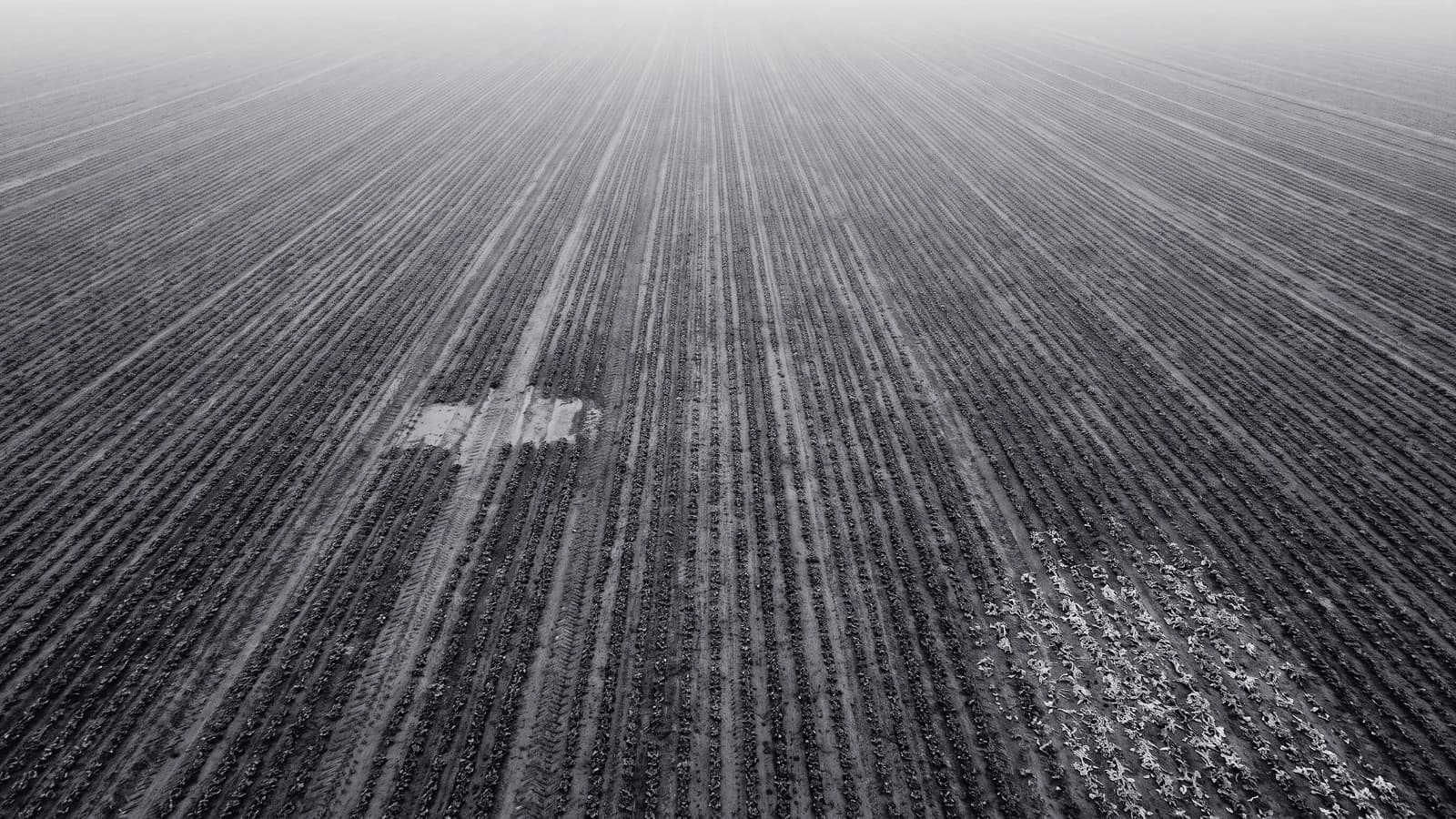

Illustrative analysis of this frame: Plant, Vegetation.
Detected regionsRegion, normalised frame coordinates
- 01PlantObjectX 0.29 Y 0.46 A 1.0% ∠ +6°
- 02VegetationScenarioX 0.69 Y 0.66 A 9.0% ∠ +4°
What industrial computer vision reads
- 01Objects
- People, vehicles, machinery, infrastructure, assets and animals, in the conditions a real site actually presents.
- 02Detection chains
- Multi-step questions such as PPE verification, resolved as person, then head, then helmet.
- 03Asset state
- Fixed infrastructure held against its own normal visual state, where any change is informative.
- 04Measurement
- Extent as well as presence, how far a fluid has propagated, not only that it is there.
Scenario
The clean half is part of the finding
A film on water has no shape anyone could predict and no edge anyone could assume. What makes it detectable at all is that the rest of the basin is not doing it — so the nominal water is marked too, and the reading is the boundary between the two.
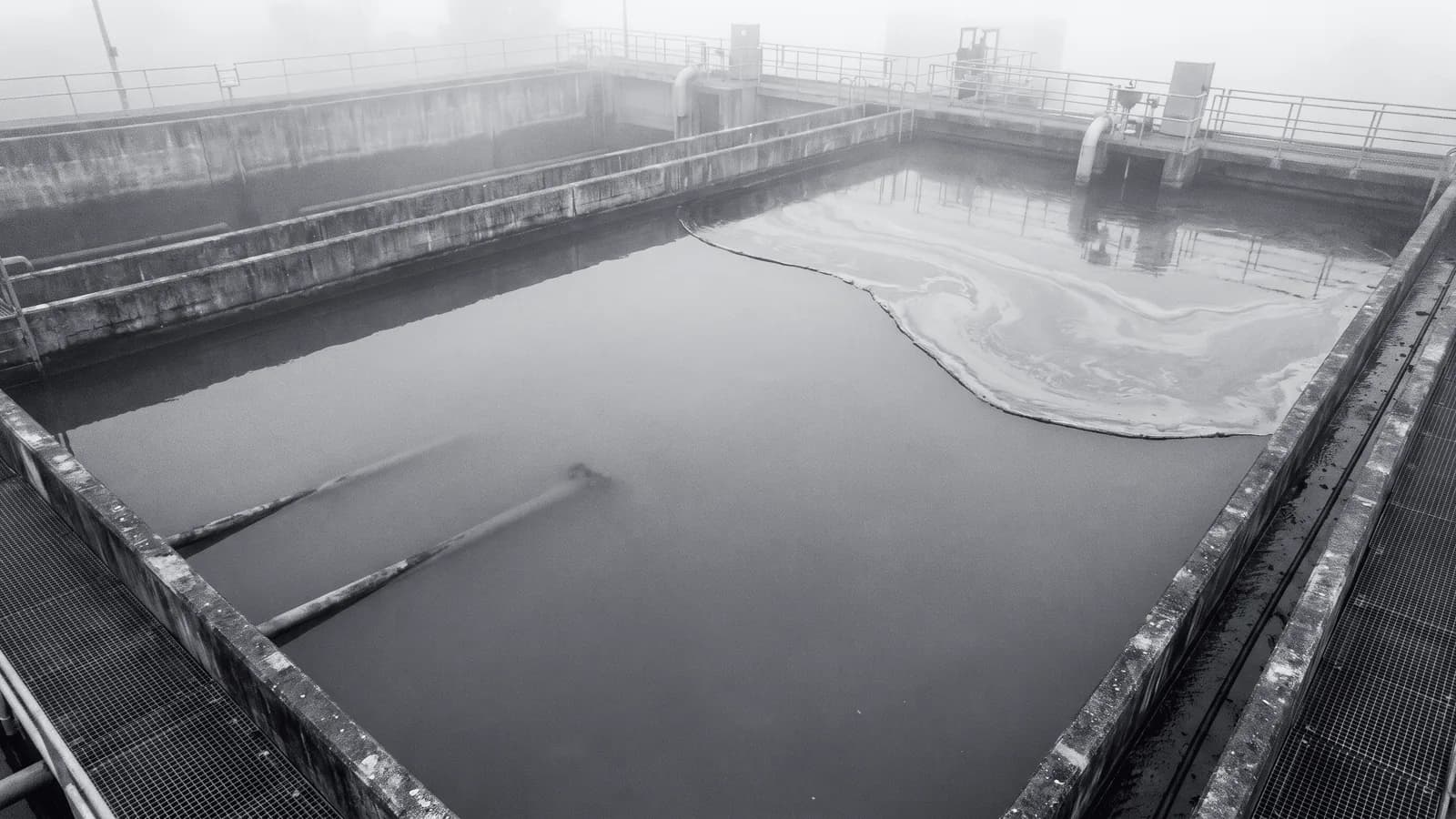
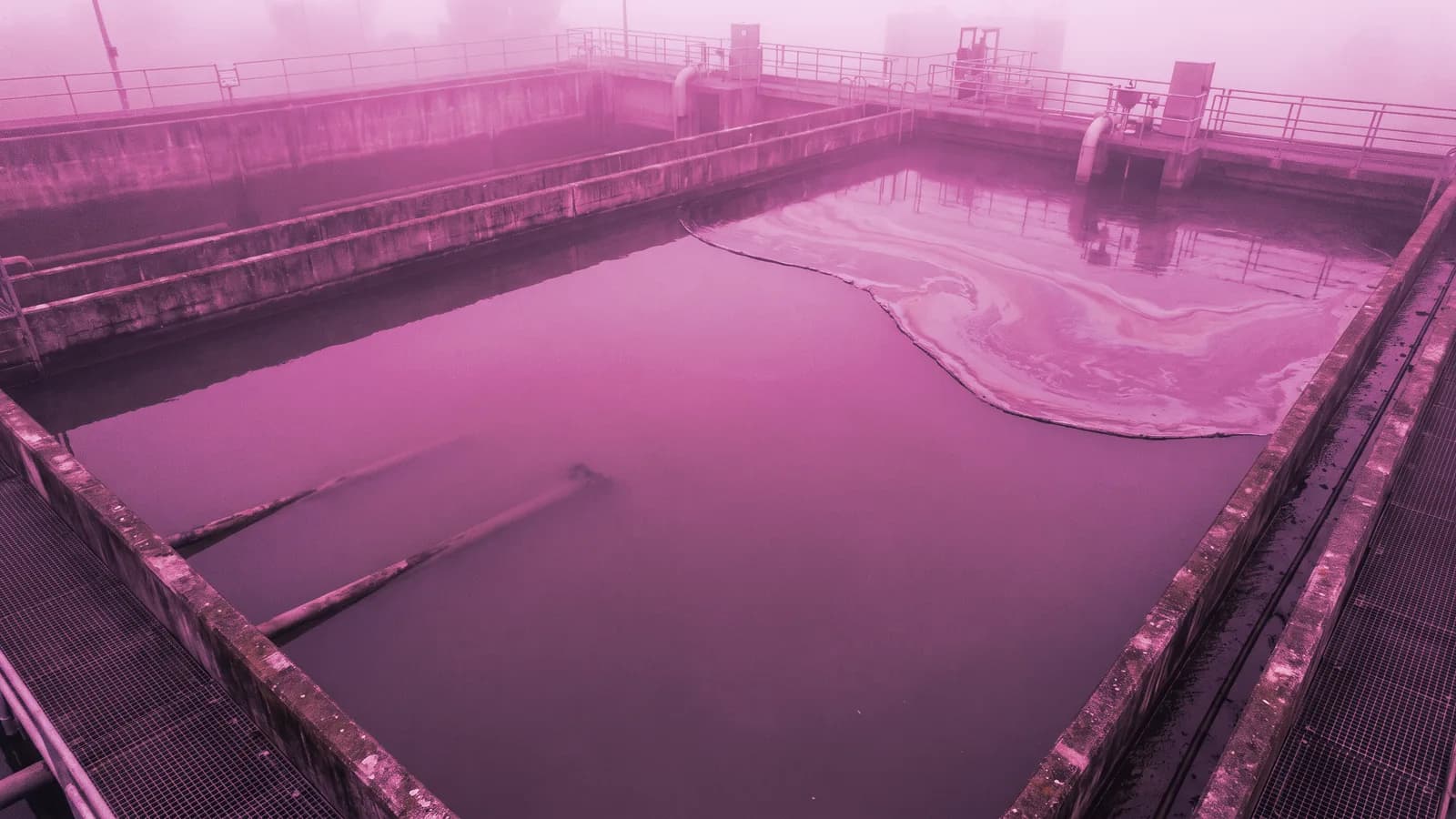
Illustrative analysis of this frame: Contamination, Zone.
Detected regionsRegion, normalised frame coordinates
- 01ContaminationScenarioX 0.48 Y 0.14 A 13.1% ∠ +1°
- 02ZoneScenarioX 0.12 Y 0.36 A 10.2% ∠ +21°
Measurement, not just presence
Some industrial questions require an extent rather than a yes. Whether a fluid is present is a weaker question than how far it has propagated; whether spray is occurring is weaker than how much and where. Arkania has delivered detection with propagation measurement in oil and gas operations, and spray detection with measurement and control, a case several other vendors attempted before it was resolved.
Drone-based work extends the same principle to areas fixed cameras do not reach, including construction progress control against a checklist, applied on pipeline works.
Working with the installed estate
The cameras on an industrial site were installed over many years, by different contractors, for recording. They are heterogeneous in make, age, resolution, mounting height and lighting, and they will not be replaced to suit an AI project.
Treating that as the starting condition rather than as a problem to be fixed is a design requirement. Integration with systems already in operation follows the same rule, SCADA, OPC UA, MQTT and M2M, so that what vision produces arrives in the control environment operators already use.
Owning the model and its lifecycle
A computer vision model is only as good as its fit to the environment it watches, and environments change: a line is reconfigured, a camera is re-aimed, a yard is re-laid, a season changes the light. Specialisation to a site is therefore not a one-off setup step but a lifecycle property.
Arkania holds that lifecycle in-house, models designed, developed, trained and operated by Arkania, owned at code, architecture and lifecycle level. Re-specialising a model when the environment moves is part of operating the system rather than a new procurement.
Where industrial computer vision is deployed
The environments where the scene is physical, the conditions are poor, and the cameras have been there longer than the project.
Common questions about computer vision
What is industrial computer vision?
Computer vision engineered for physical operating environments, reading assets, people, machinery and zones from installed cameras, drones, robots and embedded devices, under the lighting, weather and mounting conditions a real site actually presents.
How is it different from machine vision for quality inspection?
Machine vision is typically fixed to one station and one measurement, in controlled lighting. Industrial computer vision reads the wider scene, people, zones, interactions, asset state and deviation, across a site, in uncontrolled conditions.
Does it work in fog, glare and at night?
Those conditions are the deployment environment rather than an edge case, which is why models are specialised to a site instead of validated on clean imagery. What a specific installation achieves is established during the engagement rather than asserted beforehand.
Can it measure, or only detect?
Both, where the question requires it. Fluid detection with propagation measurement and spray detection with measurement and control are applications Arkania has delivered in oil and gas operations.
Who owns the trained model?
The client. A model trained on a client's environment is treated as something they own, and Arkania holds the training and re-training lifecycle in-house rather than buying it per run.
Discuss a computer vision project
Tell us what has to be read, in what conditions, and what happens when the system finds it.
Industrial and enterprise enquiries · EN / ES