

02 · Operating environment
AI for industrial plants and heavy industry
Industrial AI and computer vision for plants, halls and yards, reading people, machinery and shared space from the cameras already installed.
A working plant is a environment of overlapping hazards where almost nothing is where it was yesterday: material moves, plant moves, people move through both. Arkania brings computer vision and video analytics to that environment, on the cameras already installed, so that the yard, the hall and the loading bay are readable as operating states rather than as footage nobody has time to watch.
The operating context
Industrial sites are usually well instrumented at the machine and badly instrumented in the space between machines. A press knows its own cycle; nothing knows that a person walked behind it. CCTV exists almost everywhere and is used almost entirely after the fact, an incident happens, and the recording is reviewed to establish what did happen. The capability gap is not the camera, which is already there. It is that nobody can watch two hundred of them continuously, and that the conditions worth watching for are specific to this site's layout and this site's procedures.
- Person
- Machinery
- Vehicle
- Interaction
- Zone
What makes these environments difficult
- 01
Layout changes faster than any fixed rule set. A zone that was a walkway in the morning is a lift area in the afternoon, and a system that only knows fixed lines will be wrong twice a day.
- 02
The camera estate is heterogeneous and was installed for recording rather than for analysis, different makes, different ages, different mounting heights, different lighting.
- 03
Plants do not stop for a pilot. Anything introduced has to earn its place alongside production rather than pausing it.
- 04
Findings have to reach a shift supervisor in a form that supports a decision, not a dashboard someone would have to be watching already.
Interaction
A hand, and what it is close to
A person and an opened cabinet are two detections and two ordinary facts. The reading that matters is the one that exists only between them: a clearance, closing, on equipment whose internals are exposed. That is an interaction, and it is drawn as a line rather than as two more boxes.
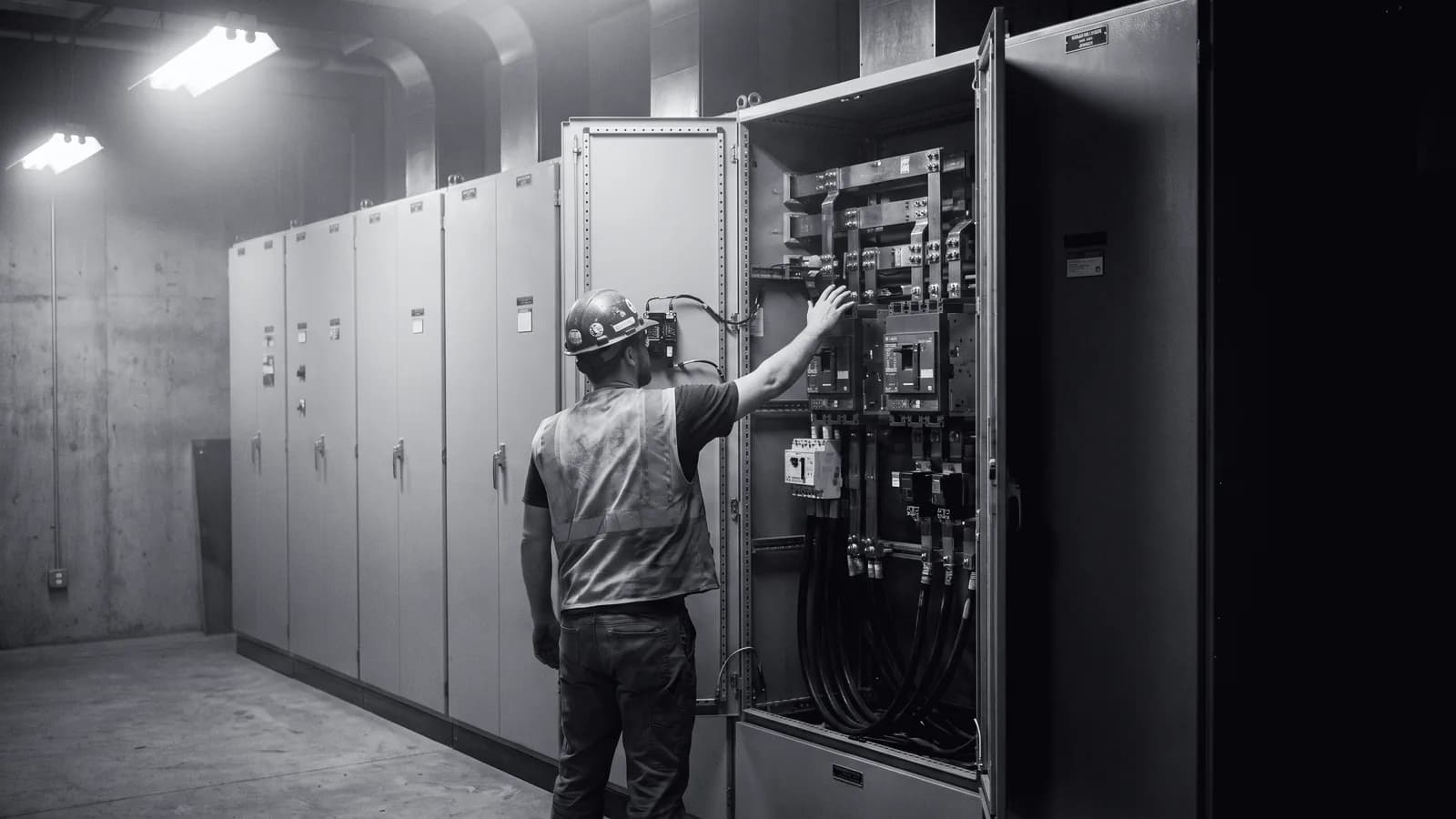
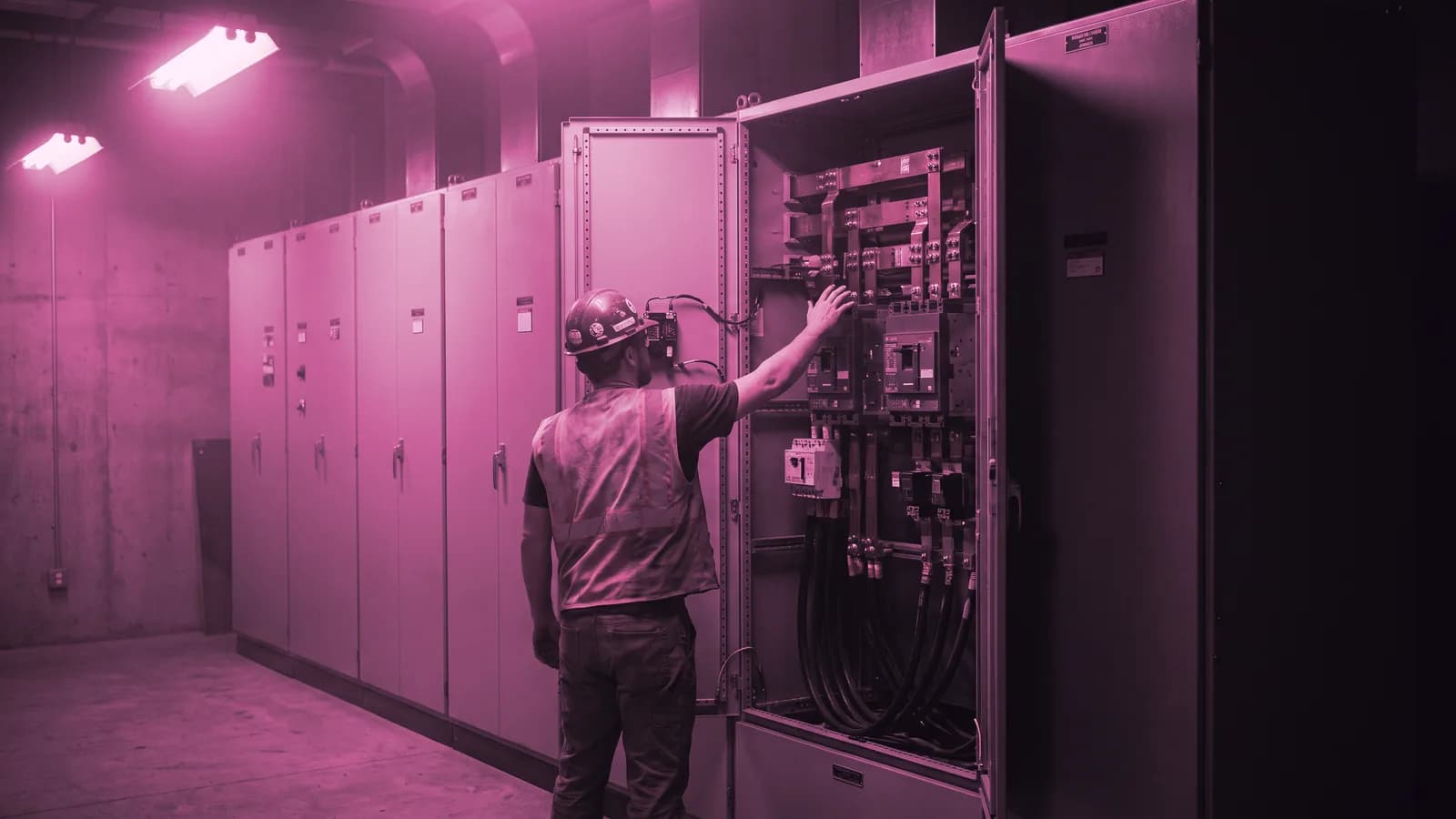
Illustrative analysis of this frame: Person, PPE / Helmet, Cabinet, Panel.
Detected regionsRegion, normalised frame coordinates
- 01PersonObjectX 0.36 Y 0.33 A 6.6% ∠ +66°
- 02PPE / HelmetObjectX 0.39 Y 0.33 A 0.3% ∠ +7°
- 03CabinetObjectX 0.35 Y 0.11 A 12.2% ∠ +90°
What Arkania brings
- 01
Detection and recognition running where the constraint requires it, on-premise, at the edge on existing cameras and embedded devices, or in private cloud.
- 02
Integration with the systems already in operation through SCADA, OPC UA, MQTT and M2M, so visual findings enrich the control environment instead of forming a second, parallel one.
- 03
Fully proprietary models, owned at code, architecture and lifecycle level, so continuity does not depend on an external provider's roadmap.
- 04
Contextual understanding rather than isolated detections: objects, the interactions between them, and the scenarios those interactions form.
The AI capabilities that apply here
- 01Industrial computer vision
- Visual reading of people, machinery, vehicles and zones across a working site, from the camera estate already in place.
- 02Interaction analysis
- The relationship between objects, an operator and a machine, a vehicle and a walkway, which is where most of the risk in a plant actually lives.
- 03Pattern identification
- Recurring conditions across long operating periods, rather than single frames judged in isolation.
- 04Operational alerting
- Conditions surfaced to the shift and the supervisor responsible for acting on them.
Interaction
Detecting what is not there
Every PPE mark on this site so far confirms a presence: a helmet outlined on a head that has one. The commercially real reading is the opposite, and it cannot be an outline, because the thing being reported is absent. It is a lock on the position where the check was made, and the state says what the check found.
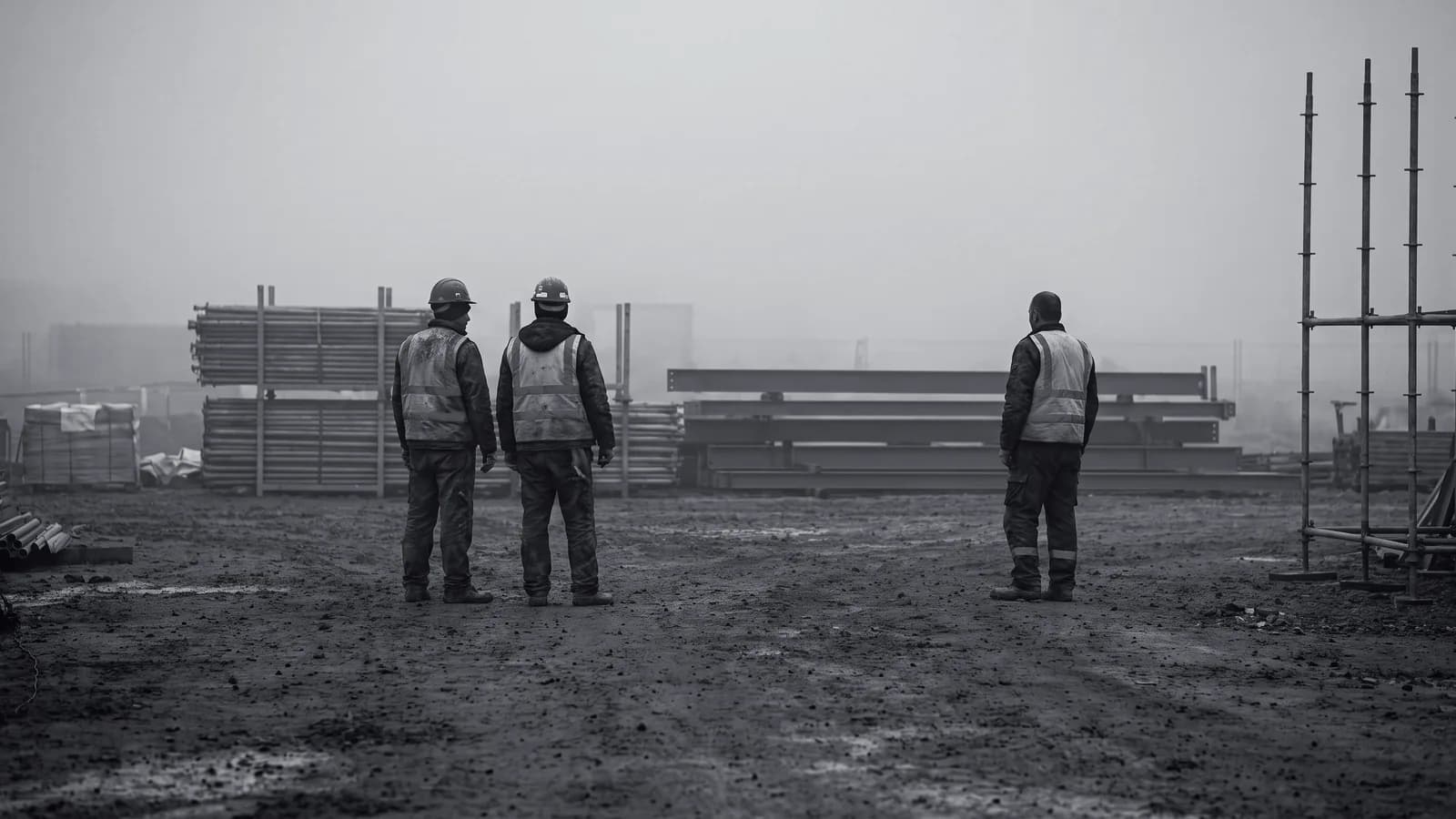
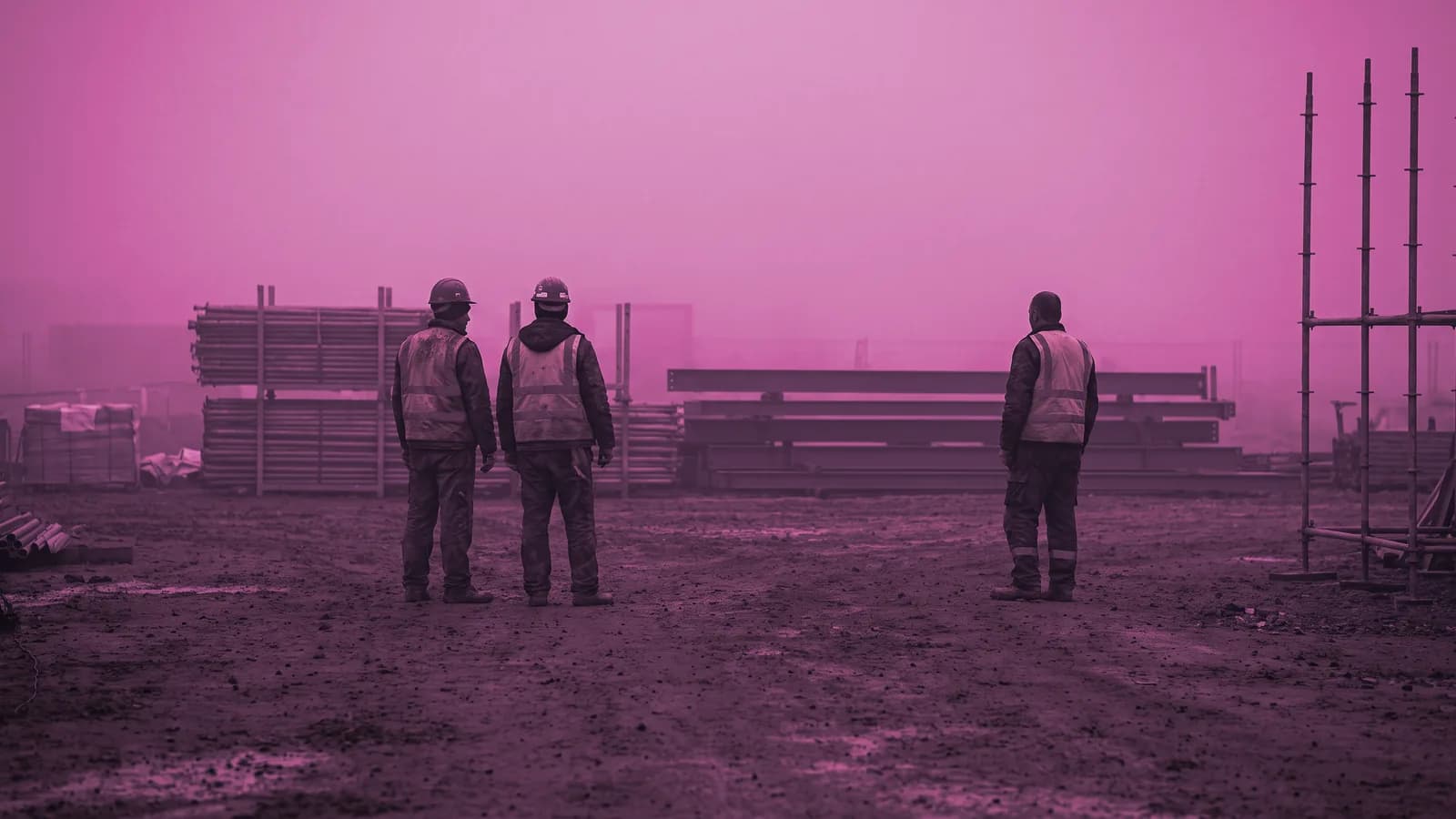
Illustrative analysis of this frame: PPE / Helmet, Person.
Detected regionsRegion, normalised frame coordinates
- 01PPE / HelmetObjectX 0.70 Y 0.35
- 02PersonObjectX 0.70 Y 0.36 A 1.4% ∠ −89°
- 03PPE / HelmetObjectX 0.29 Y 0.34
What the system is asked to recognise here
- 01
People relative to machinery, walkways and temporary exclusion zones.
- 02
Vehicles and material handling equipment moving through shared space.
- 03
Machinery states that are visible from outside the machine, position, motion, obstruction.
- 04
Interactions between operator and equipment, including approach and handling.
- 05
Deviations from an area's own operating baseline rather than from a generic rule.
Where this applies on an industrial site
- 01
Shared-space movement, where people and plant use the same ground and the conflict is one of timing rather than of layout.
- 02
Zone integrity around live work, where the boundary is temporary and set by the task.
- 03
Continuous observation of large yards and halls, where the area exceeds what any control room can watch.
- 04
Access and handling around equipment that is dangerous while it is running and unremarkable while it is not.
Operational value
The value is that the space between machines becomes legible while a situation is still forming, on infrastructure the site has already paid for, without operational imagery or trained models leaving the client's control. Arkania does not publish performance figures it cannot evidence per deployment; what a given installation delivers is established during the engagement rather than asserted before it.
Common questions
Do we need to replace our cameras?
No. Working with the installed estate is a design requirement. Where a specific view is genuinely not covered, that is identified as a gap in the environment rather than solved by replacing what already works.
Can this run without an internet connection?
Yes. Inference can run on-premise or at the edge on cameras and embedded devices. Where connectivity, regulation or sovereignty rules out a round trip to an external provider, the deployment follows the constraint.
How does it reach our existing control systems?
Through SCADA, OPC UA, MQTT and M2M. The intent is to enrich the control environment operators already use, not to add a second screen that someone would have to be watching.
Are the models third-party?
No. Arkania designs, develops, trains and operates its own models, with ownership at code, architecture and lifecycle level.
What is detected, exactly?
Detection is structured across three dimensions: objects, people, vehicles, machinery, infrastructure, the interactions between them, and the scenarios those interactions form, including anomalous behaviour and risk patterns. What matters on a given site is defined with the site.
Related environments
Related topics
Discuss a project with Arkania
Tell us about the environment, the scale and the operational conditions. Requests are reviewed by the team, not by a queue.
Industrial and enterprise enquiries · EN / ES