

03 · Operating environment
AI for defence and situational awareness
Independent AI for perimeter, approach and situational awareness, with models and lifecycle owned by the organisation operating them.
Defence environments impose a condition that most AI procurement never has to answer: the system has to keep working when the outside world is unavailable, and it has to be answerable to the organisation operating it. Arkania's models are designed, trained and owned in-house, which is what makes them deployable where a dependency on an external provider is not an acceptable part of the architecture.
The operating context
Situational awareness is a problem of attention before it is a problem of sensing. Sites are already covered by cameras, and often by more of them than anyone can watch; what is scarce is the continuous, unbroken attention needed to notice the approach that matters among the hours where nothing does. The second constraint is sovereignty. Operational imagery is sensitive by default, a trained model is an asset in its own right, and both routinely fall outside what may be handed to a third party, which rules out a large part of the commercial AI market before any technical evaluation begins.
- Person
- Vehicle
- Perimeter
- Anomalous behaviour
- Risk pattern
What makes these environments difficult
- 01
Continuity cannot depend on an external service. An architecture that requires reaching a hyperscaler is an architecture with a single point of failure outside the operator's control.
- 02
Operational imagery and trained models are frequently classified as assets that may not leave the organisation, which excludes black-box inference and most managed AI services outright.
- 03
The signal is rare and the observation period is long, which is precisely the condition under which human attention degrades and automated attention does not.
- 04
Perimeters are long, often unlit and often remote, and the consequence of a missed approach is not measured in downtime.
Interaction
Object, scenario and interaction in one frame
The drone is an object. The airspace over a plant is a scenario. The drone being inside it is the finding — and it is the only one of the three that would reach an operator. The other two are context the reading could not exist without.
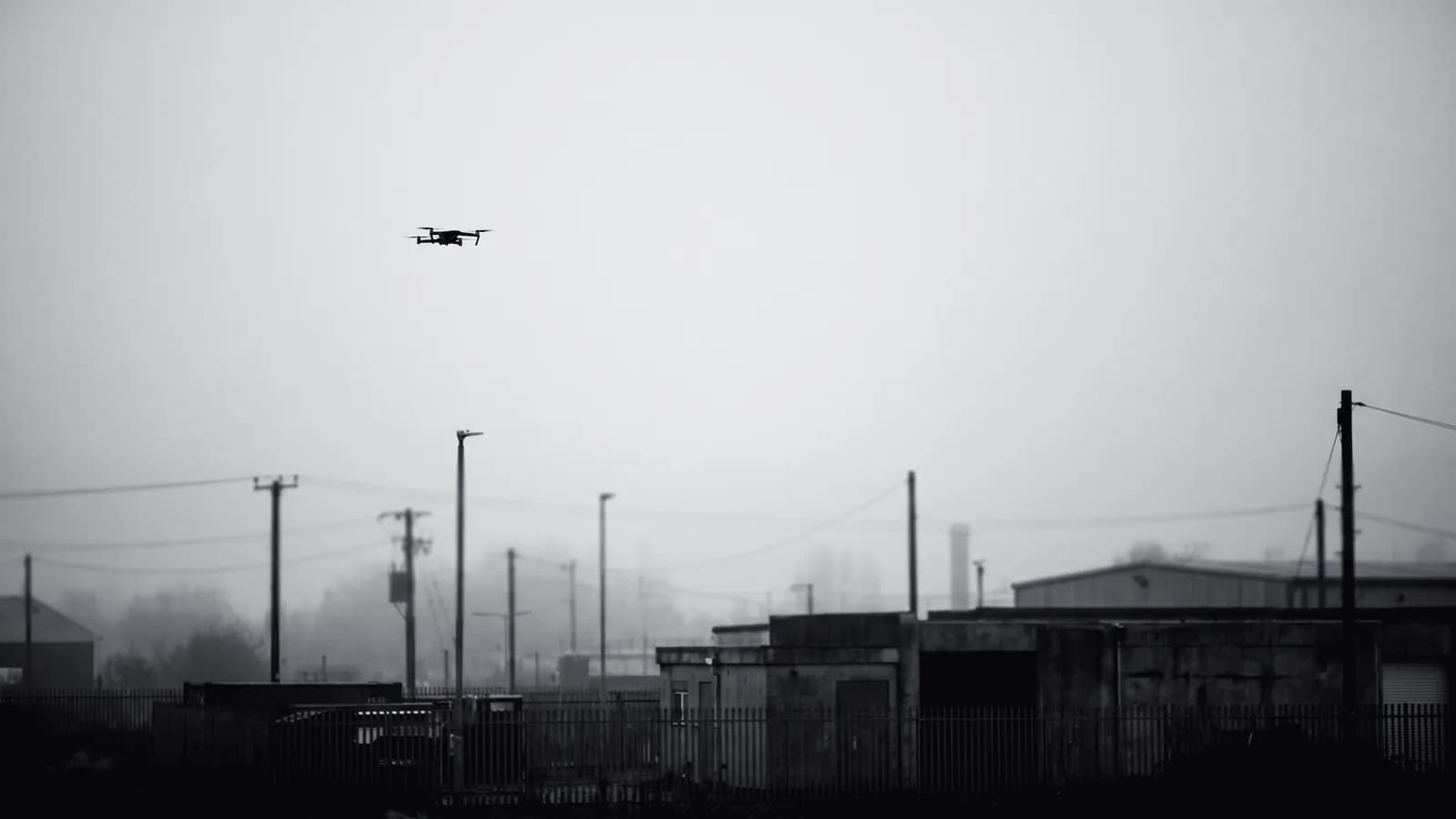
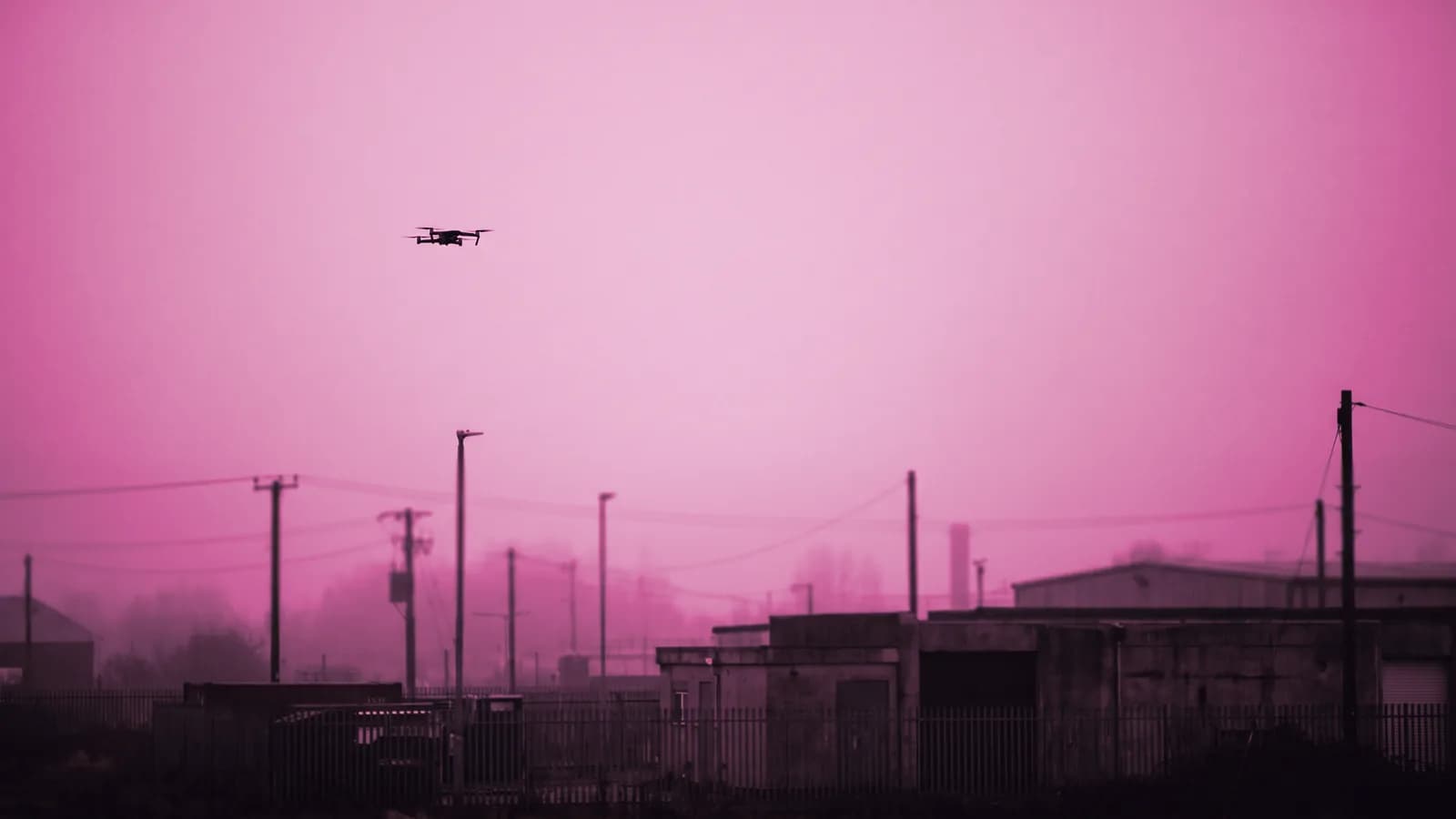
Illustrative analysis of this frame: Drone, Zone, Barrier.
Detected regionsRegion, normalised frame coordinates
- 01DroneObjectX 0.28 Y 0.28
- 02ZoneScenarioX 0.17 Y 0.22 A 6.1% ∠ +0°
- 03BarrierObjectX 0.02 Y 0.87 A 5.0% ∠ +1°
What Arkania brings
- 01
Fully proprietary models, designed, developed, trained and operated in-house, owned at code, architecture and lifecycle level, with no dependency on third-party models or black-box inference.
- 02
Deployment that follows the constraint: on-premise, at the edge on cameras, drones, robots and embedded devices, or in private cloud, with the client retaining control over data flows.
- 03
Continuous observation of perimeters, approaches and controlled areas, at the scale and duration where sustained human attention is not a realistic requirement.
- 04
Contextual understanding rather than isolated detections: objects, the interactions between them, and the scenarios those interactions form.
The AI capabilities that apply here
- 01Independent AI
- Owned models and owned lifecycle, the property that decides whether a system is deployable in this sector at all.
- 02Video analytics
- Continuous reading of perimeters, approaches and controlled areas across a long observation period.
- 03Behavioural and pattern analysis
- Recognition of approach patterns and anomalous behaviour against an area's own established baseline.
- 04Operational alerting
- Findings routed to the operators responsible for them, with the auditability that a later review requires.
Object
A carried object, localised
The system localises a carried object and raises it for an operator to look at. It does not identify a weapon type from a single still and the label does not claim to — an outline says where something is, which is the honest limit of what one frame at this distance contains.
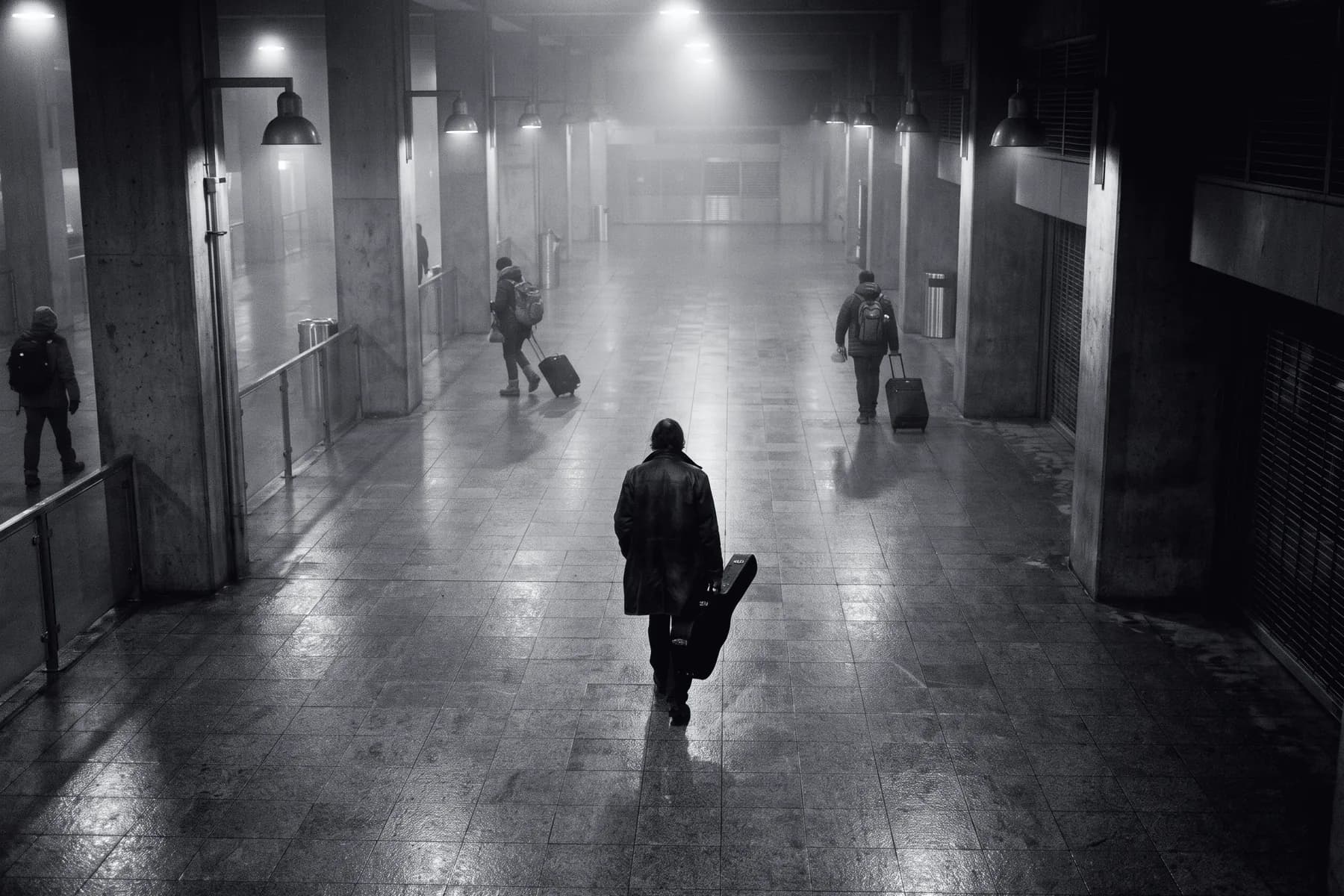
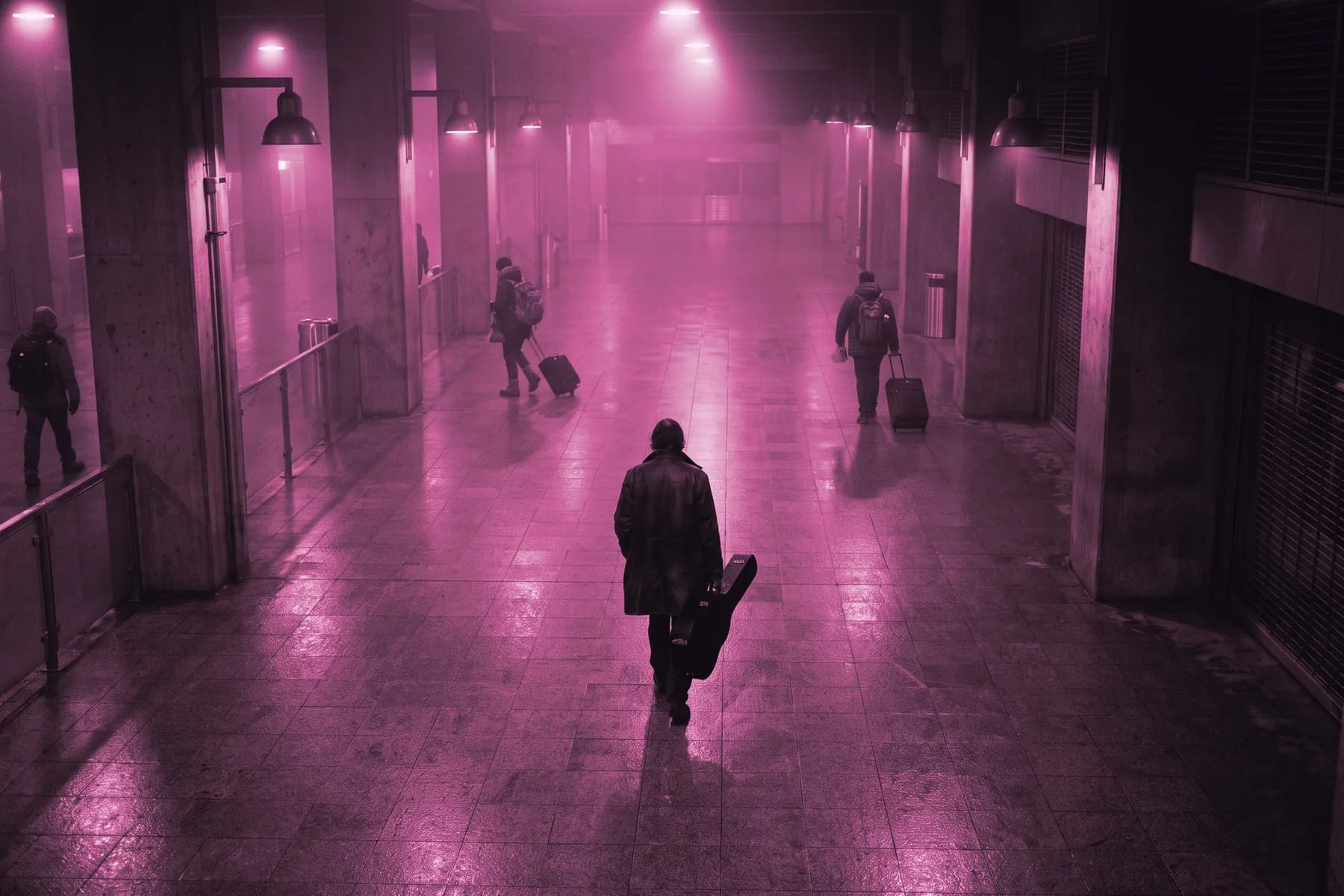
Illustrative analysis of this frame: Restricted object, Person.
Detected regionsRegion, normalised frame coordinates
- 01Restricted objectObjectX 0.54 Y 0.60
- 02PersonObjectX 0.47 Y 0.45 A 2.1% ∠ −89°
- 03PersonObjectX 0.63 Y 0.29 A 0.5% ∠ +90°
What the system is asked to recognise here
- 01
People and vehicles relative to perimeters, approaches and controlled areas.
- 02
Perimeter integrity along boundaries too long to be watched continuously by an operator.
- 03
Movement patterns that deviate from an area's own established baseline.
- 04
Anomalous behaviour, including presence and approach at times or in places where neither is routine.
- 05
Sequences that only become significant when read together rather than frame by frame.
Where this applies in a defence environment
- 01
Perimeter and approach monitoring across sites where the boundary exceeds practical human observation.
- 02
Continuous watch over controlled areas during long, mostly uneventful observation periods.
- 03
Situational awareness built from sensors already installed, rather than from a new sensing programme.
- 04
Deployments where the governing constraint is that no imagery and no model may leave the operator's control.
Operational value
The value is sustained attention over a long, mostly uneventful observation period, delivered by a system whose models and lifecycle belong to the organisation operating it. Arkania publishes no detection rates, no response figures and no deployment references for this sector: performance in a defence environment is established under that environment's own evaluation, not asserted on a website.
Common questions
Does any imagery or model leave our infrastructure?
Not unless the deployment is designed that way. Inference is supported on-premise and at the edge, clients retain control over data flows, and trained models are owned by the client rather than licensed back from a provider.
Is any part of this built on third-party AI?
No. Arkania designs, develops, trains and operates its own systems, with ownership at code, architecture and lifecycle level and no dependency on hyperscaler models or black-box inference engines.
Can it run disconnected?
Deployment at the edge on cameras, drones, robots and embedded devices is supported, which is what removes the dependency on a round trip to an external service. The specific availability posture of a given installation is defined with the operator.
Does Arkania publish detection performance for this sector?
No. Figures that cannot be evidenced per deployment are not published. Performance is established under the operator's own evaluation conditions.
Which sensors does it work with?
The installed estate, fixed cameras, drones, robots and embedded devices, with integration into existing systems through SCADA, OPC UA, MQTT and M2M.
Discuss a project with Arkania
Tell us about the environment, the scale and the operational conditions. Requests are reviewed by the team, not by a queue.
Industrial and enterprise enquiries · EN / ES