

06 · Operating environment
AI for pharmaceutical manufacturing
Industrial computer vision for controlled production environments, reading operating sequence, zone integrity and line events without entering the process.
Pharmaceutical production is the most tightly specified environment Arkania works in. Every step has a written procedure, every zone has a classification, and the record of what happened is as much a deliverable as the product. Arkania applies computer vision to that environment from outside the process, reading sequence, zone and line state from the cameras and sensors that can be installed without touching what is qualified.
The operating context
Two things make this environment unusual. The first is that correctness is written down: unlike a yard or a field, there is an approved sequence, and a deviation from it is defined rather than inferred. That makes a vision system's job clearer and its output more directly useful. The second is that the environment resists change. Equipment and process are qualified, and anything introduced has to sit alongside that qualification rather than inside it, which is why observation from outside the process is the shape this work takes.
- Person
- Machinery
- Operational sequence
- Zone
- Anomalous behaviour
What makes these environments difficult
- 01
Equipment and process are qualified, so a system cannot be inserted into the line. It has to observe from outside and add nothing the qualification would have to account for.
- 02
Classified zones have rules about what may enter them and in what state, and those rules are specific to the site rather than generic.
- 03
The record matters as much as the event. A finding that cannot be evidenced later is of limited use in an environment built around traceability.
- 04
Surfaces are bright, uniform and reflective, which is a harder visual problem than it looks: there is very little contrast for a model to work with.
Object
The same pass, at a different scale
A microscope field is an image like any other: discrete instances to resolve and count, denser regions to segment, morphology to compare between frames. This is image analysis and pattern recognition — it is not a diagnosis, and Arkania makes no clinical claim.
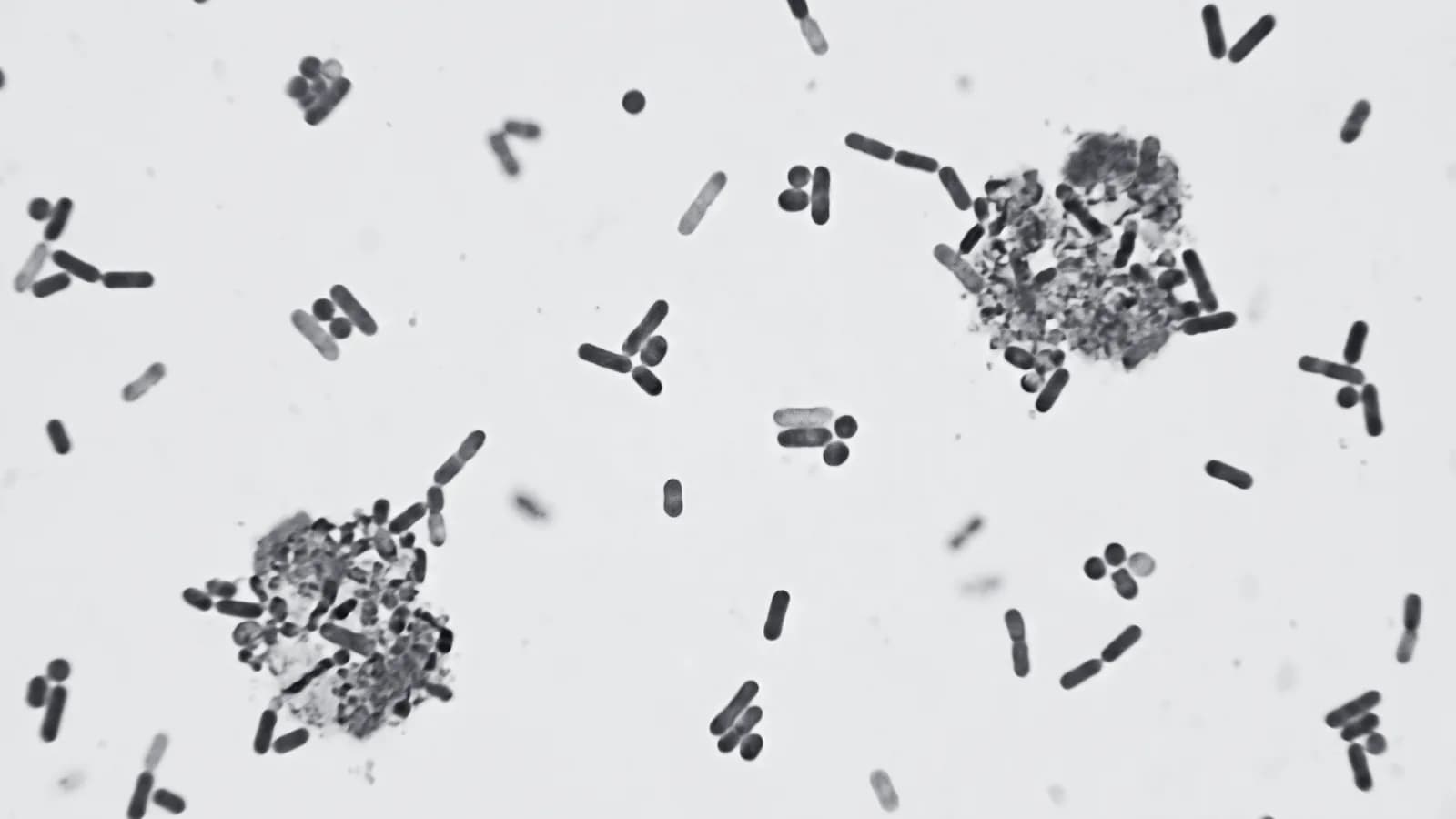
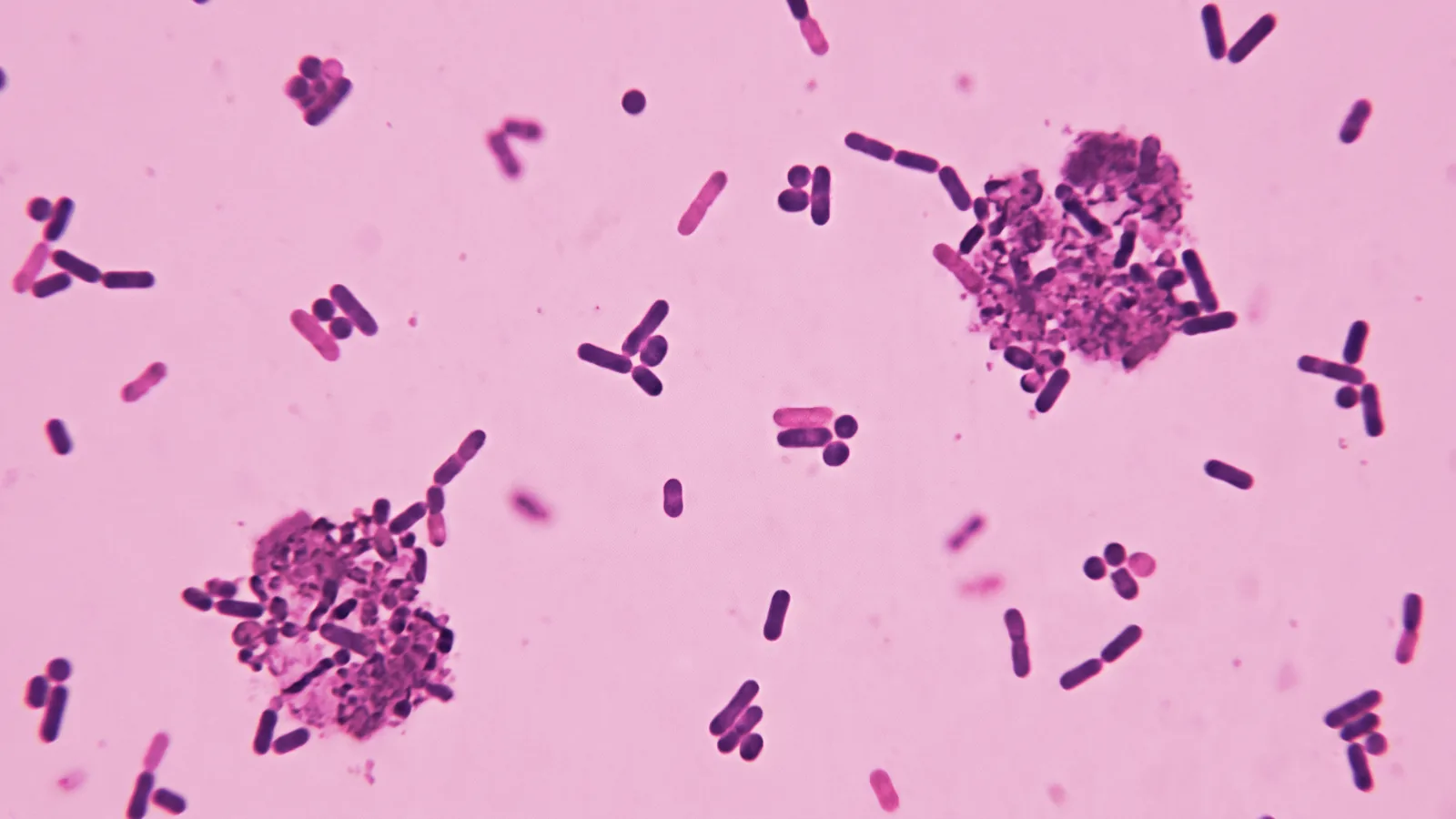
Illustrative analysis of this frame: Colony, Particle.
Detected regionsRegion, normalised frame coordinates
- 01ColonyObjectX 0.69 Y 0.17 A 4.4%
- 02ColonyObjectX 0.14 Y 0.59 A 4.2%
- 03ParticleObjectX 0.04 Y 0.07
What Arkania brings
- 01
Detection and recognition running on-premise or at the edge on cameras, drones, robots and embedded devices, so nothing about the process has to change to accommodate it.
- 02
Integration with the systems already in operation through SCADA, OPC UA, MQTT and M2M, so findings reach the environment the site already works in.
- 03
Fully proprietary models, owned at code, architecture and lifecycle level, specialised to one suite rather than configured generically.
- 04
Contextual understanding rather than isolated detections: objects, the interactions between them, and the scenarios those interactions form.
The AI capabilities that apply here
- 01Sequence recognition
- Whether an operating sequence is running in its approved order, read across stations rather than at one.
- 02Zone integrity
- Presence and state within classified areas, measured against that area's own rules.
- 03Industrial computer vision
- Reading equipment, material and people on bright, low-contrast surfaces where a model trained on ordinary imagery struggles.
- 04Operational alerting
- Findings surfaced with an auditable record behind them, which is what a traceable environment requires.
Object
The one that went on crooked
Nine identical containers and one label a few degrees out. Neither the outline nor the count finds this: what is being reported is a condition, and a condition needs its own line — the class above, the state below. The two sound labels beside it are drawn in the ordinary colour because the comparison is the evidence.
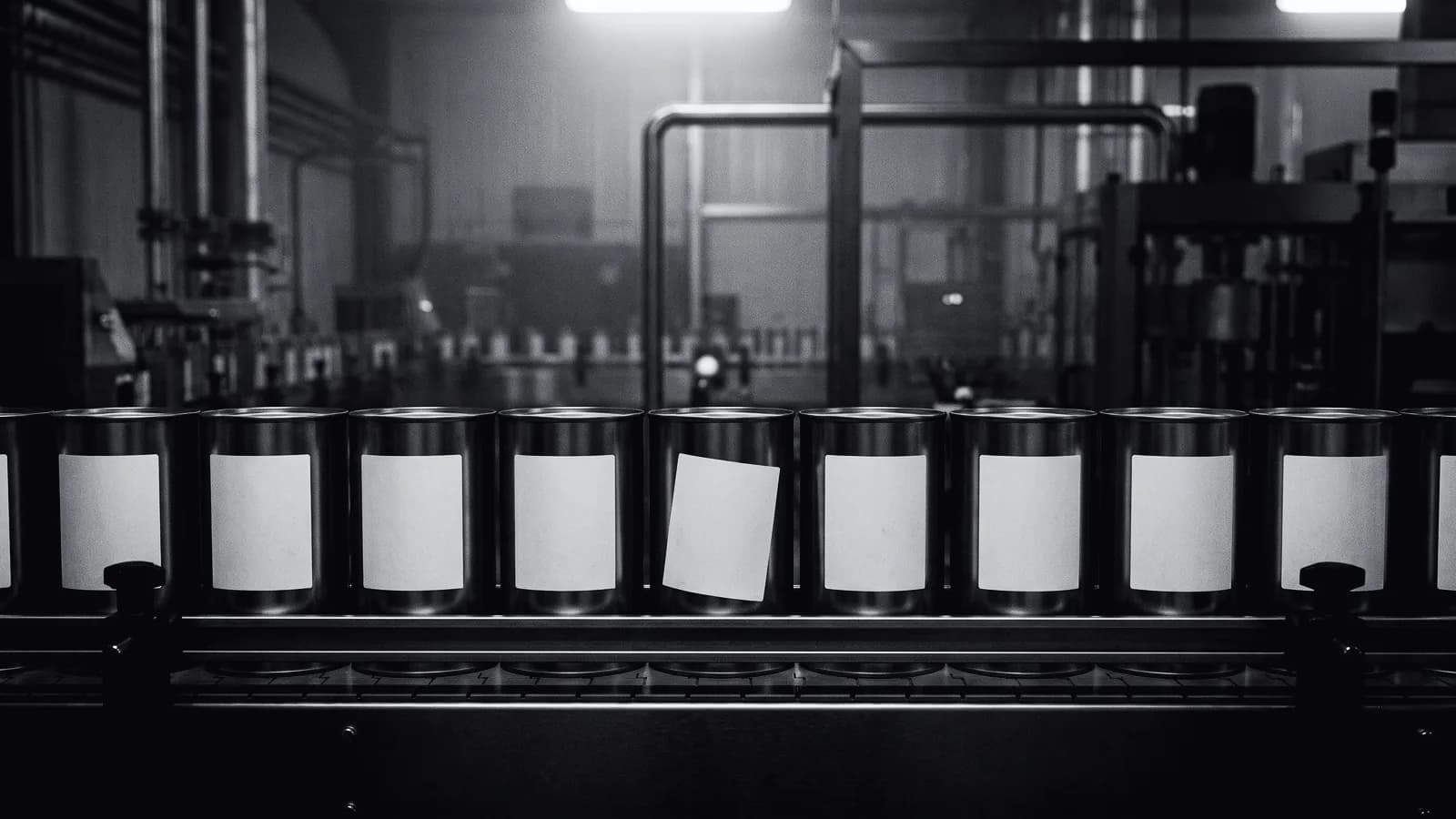
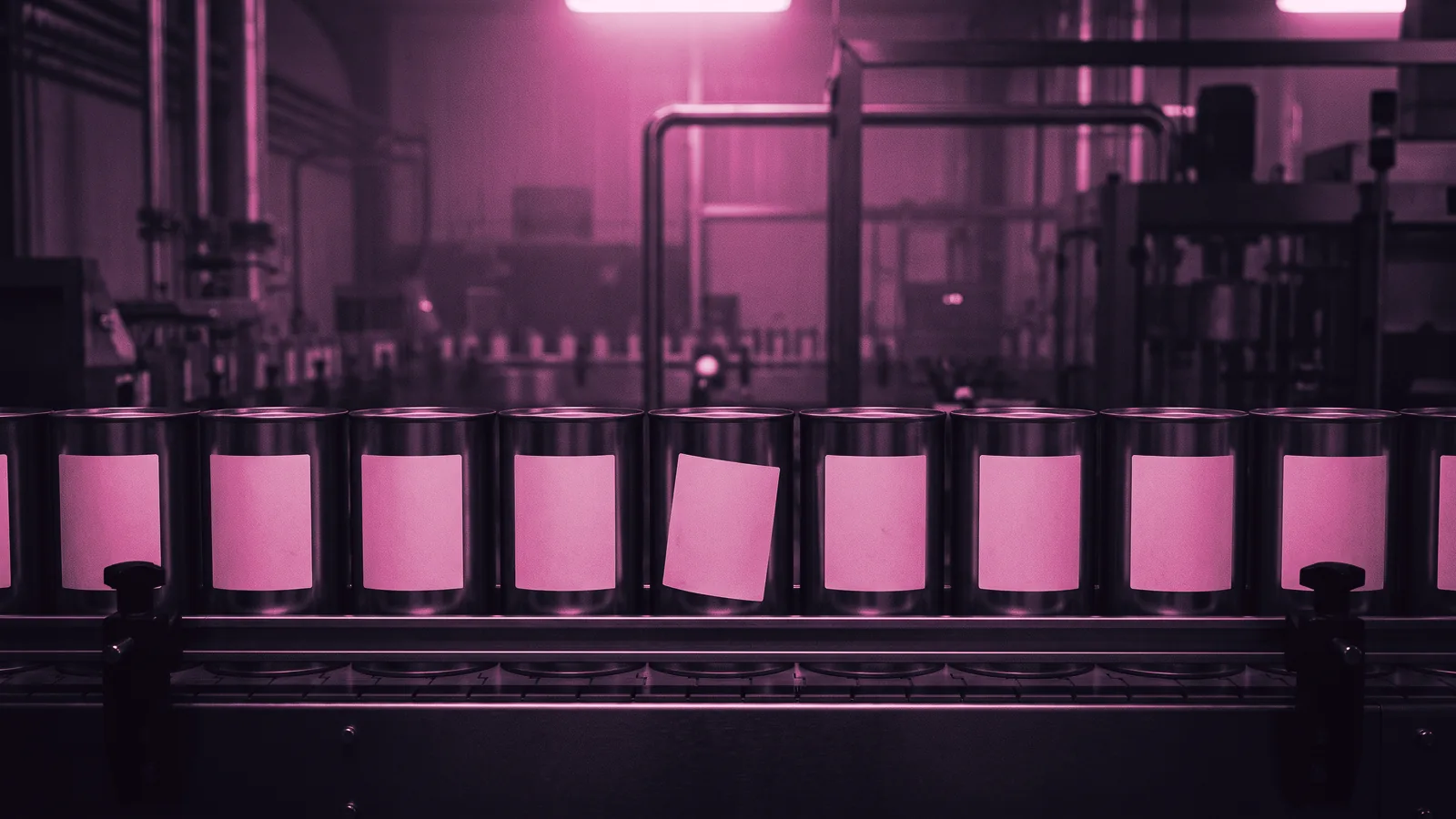
Illustrative analysis of this frame: Label.
Detected regionsRegion, normalised frame coordinates
- 01LabelObjectX 0.46 Y 0.58 A 0.9%
- 02LabelObjectX 0.36 Y 0.59 A 0.9%
- 03LabelObjectX 0.57 Y 0.59 A 0.9%
What the system is asked to recognise here
- 01
Operating sequences performed out of their approved order.
- 02
Presence and state within classified zones, including gowning where that is the site's rule.
- 03
Equipment and line states visible from outside the process: position, motion, obstruction.
- 04
Interactions between operator and equipment during handling and intervention.
- 05
Deviation from the suite's own established operating pattern rather than from a generic rule.
Where this applies in a pharmaceutical facility
- 01
Sequence adherence across a filling, capping and packing line, where the defect is an order rather than a measurement.
- 02
Zone and gowning integrity at the boundary of a classified area.
- 03
Continuous observation of a suite through a shift, where repetition erodes human attention fastest.
- 04
Line events that are visible from outside the process and invisible to the process instrumentation.
Operational value
The value is that adherence becomes observable continuously and from outside the qualified process, on infrastructure that can be installed without disturbing it, with a record behind every finding. Arkania does not publish compliance, yield or deviation figures it cannot evidence per deployment, and nothing here should be read as a regulatory claim: what a given installation delivers, and how it sits against a site's own validation regime, is established during the engagement.
Common questions
Does this touch our qualified process?
No. The work observes from outside: cameras, drones, robots and embedded devices placed so that nothing in the qualified process or equipment changes to accommodate them.
Is this a validated or GxP-compliant system?
Arkania makes no regulatory claim on this site. How a deployment sits against a site's validation regime is established with that site, in writing, during the engagement.
Can it run without sending data outside the facility?
Yes. Inference is supported on-premise and at the edge, and the client retains control over data flows and ownership of the models trained on their environment.
Bright uniform surfaces are hard to read. How is that handled?
By specialising the model to the suite rather than validating it on general imagery. Low-contrast, high-reflectance environments are the deployment condition here, not an edge case.
What is detected, exactly?
Objects, the interactions between them, and the scenarios those interactions form, including operating sequences and deviation from the area's own pattern. What matters in a given suite is defined with that site.
Related topics
Discuss a project with Arkania
Tell us about the environment, the scale and the operational conditions. Requests are reviewed by the team, not by a queue.
Industrial and enterprise enquiries · EN / ES