

08 · Operating environment
AI for large-scale logistics operations
Logistics AI for ports, terminals and yards: vehicles, people and assets read continuously across areas too large to supervise directly.
Logistics environments are large, continuous and full of movement that looks identical whether it is correct or not. A container yard at three in the morning and a container yard mid-shift present the same picture to a camera; what differs is whether the movement belongs there. Arkania reads that difference across ports, terminals, yards and distribution centres, from the camera, sensor, drone and robot estate already deployed.
The operating context
A logistics site has scale and traffic at the same time, which is an unusual combination. Areas run to hundreds of thousands of square metres and are crossed continuously by vehicles, handling equipment and people who share the same ground, and the operation runs around the clock, so there is no quiet period during which observation becomes easy. The systems in place track consignments well: a unit's identity, its status and its location in the process are usually known. What they do not track is the physical reality of the yard, where equipment actually is, which lane is blocked, whether a person is walking through a working aisle.
- Vehicle
- Person
- Asset
- Operational sequence
- Zone
What makes these environments difficult
- 01
Areas are far too large for direct supervision, and the operation does not pause long enough for observation to become straightforward.
- 02
People and heavy handling equipment share the same ground continuously, which makes the risk one of timing rather than of layout.
- 03
Movement is constant, so movement itself carries almost no information and cannot be the trigger.
- 04
Existing systems know where a consignment is in the process and not where the equipment moving it physically is.
Object
Forty-seven, not “some pallets”
Counting is a different output from detection, and it needs a different mark. Each unit load resolves as its own numbered instance, the empty bays are part of the same reading, and the total belongs to the frame rather than to any one pallet in it.
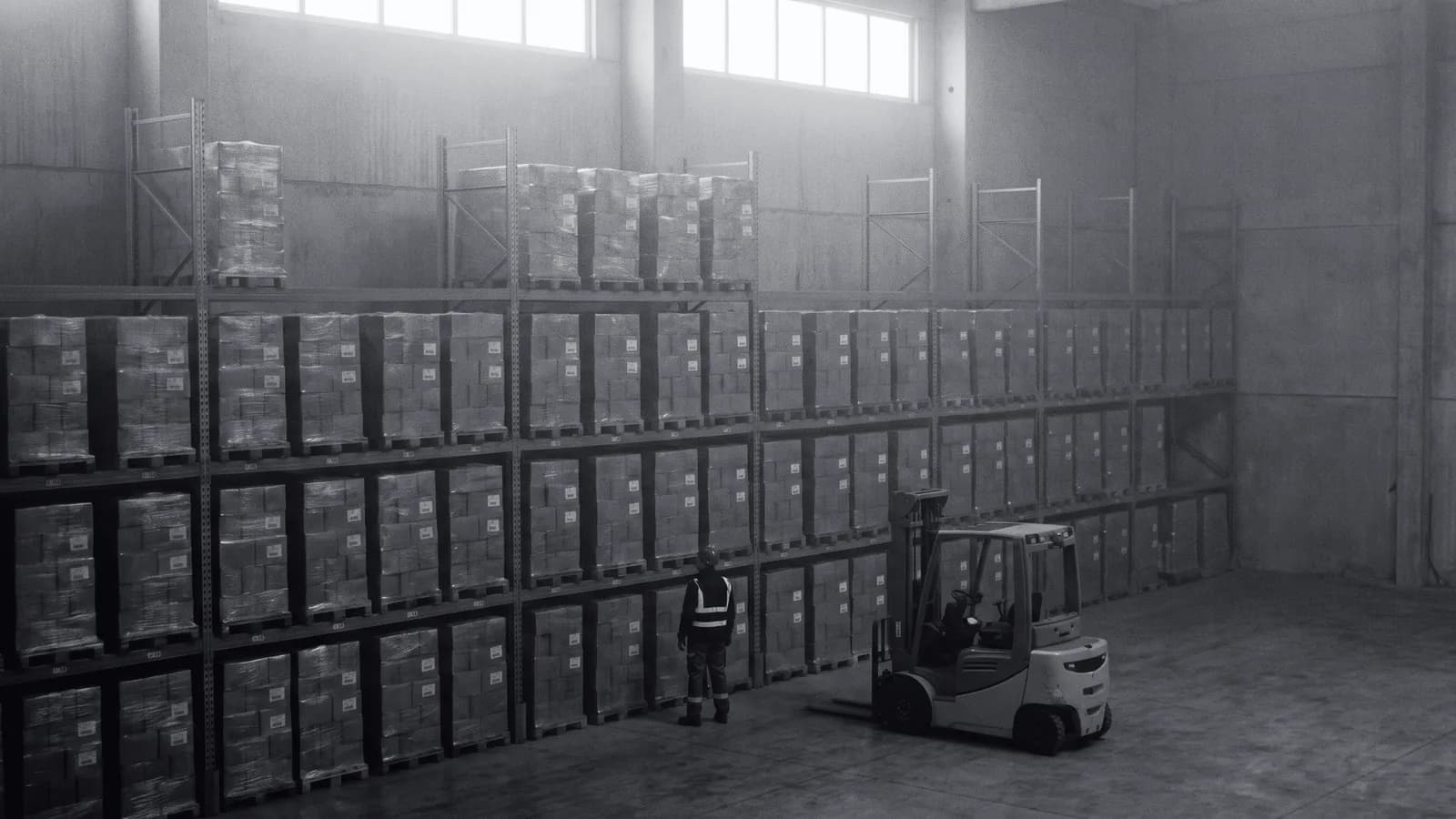
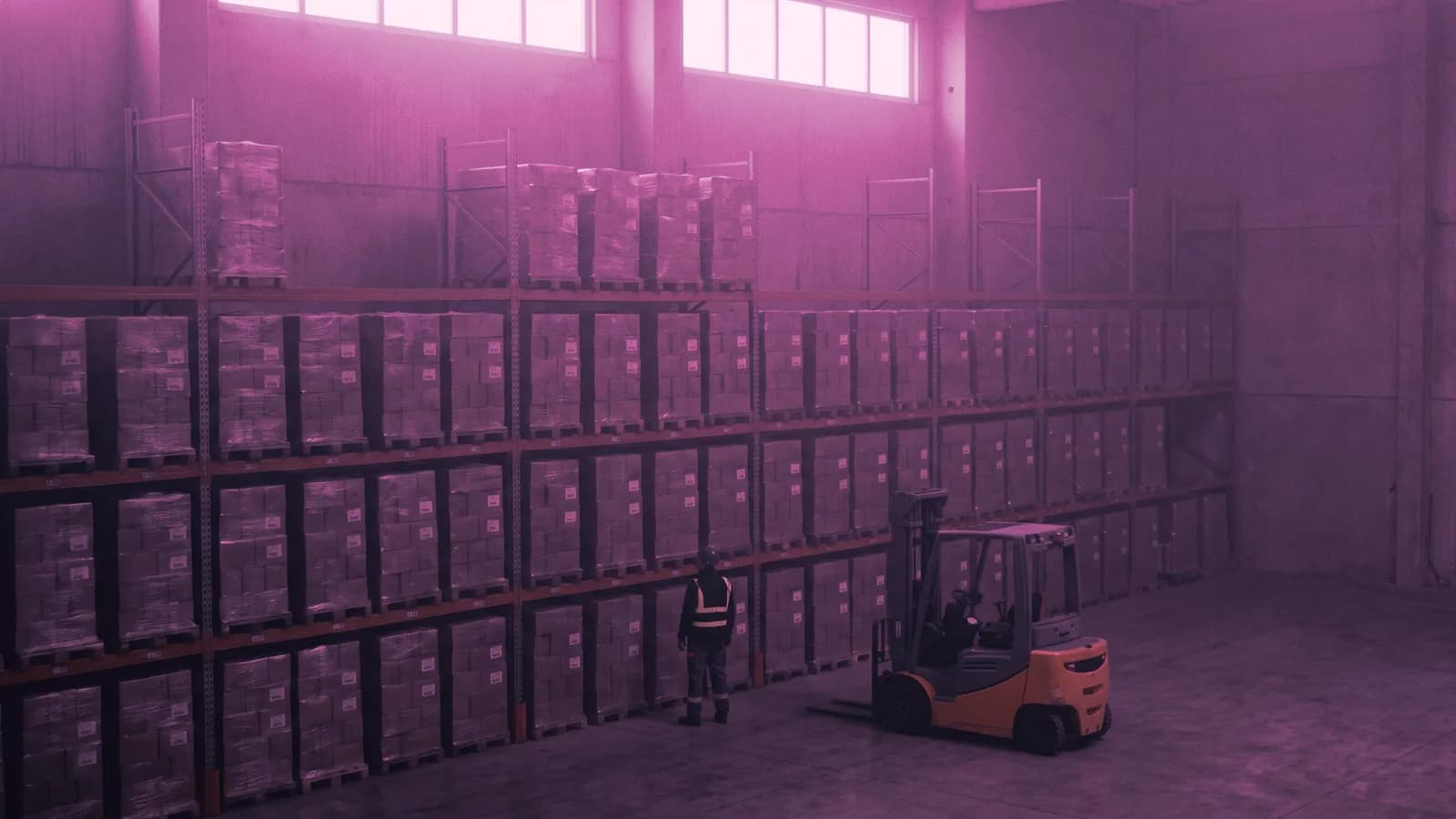
Illustrative analysis of this frame: Pallet, Racking, Forklift, Person.
Detected regionsRegion, normalised frame coordinates
- 01PalletObjectX 0.06 Y 0.50
- 02RackingObjectX 0.01 Y 0.38 A 29.6% ∠ +3°
- 03ForkliftObjectX 0.60 Y 0.61 A 2.3% ∠ −42°
What Arkania brings
- 01
Continuous reading of large areas from the camera, sensor, drone and robot estate already deployed, including at the edge where the site's connectivity requires it.
- 02
Contextual understanding rather than isolated detections: objects, the interactions between them, and the scenarios those interactions form.
- 03
Integration with systems already in operation through SCADA, OPC UA, MQTT and M2M, so physical state joins consignment state.
- 04
Fully proprietary models, owned at code, architecture and lifecycle level, so continuity does not depend on an external provider.
The AI capabilities that apply here
- 01AI video analytics
- Continuous reading of yards, aisles, gates and quays across areas too large to supervise directly.
- 02Vehicle and asset recognition
- Vehicles, handling equipment and units read as objects in a space rather than as records in a system.
- 03Sequence and flow analysis
- Whether an operating sequence, arrival, positioning, handling, departure, is running as it should.
- 04Zone integrity
- Shared ground between people and heavy equipment, where the conflict is one of timing.
Interaction
Two paths that have not met yet
The only forward-looking reading in the library. A truck, a pedestrian, a speed and a projected path — and none of the four means anything alone. What an operator needs is the time left, which exists only between the two and only because both were resolved in the same pass.
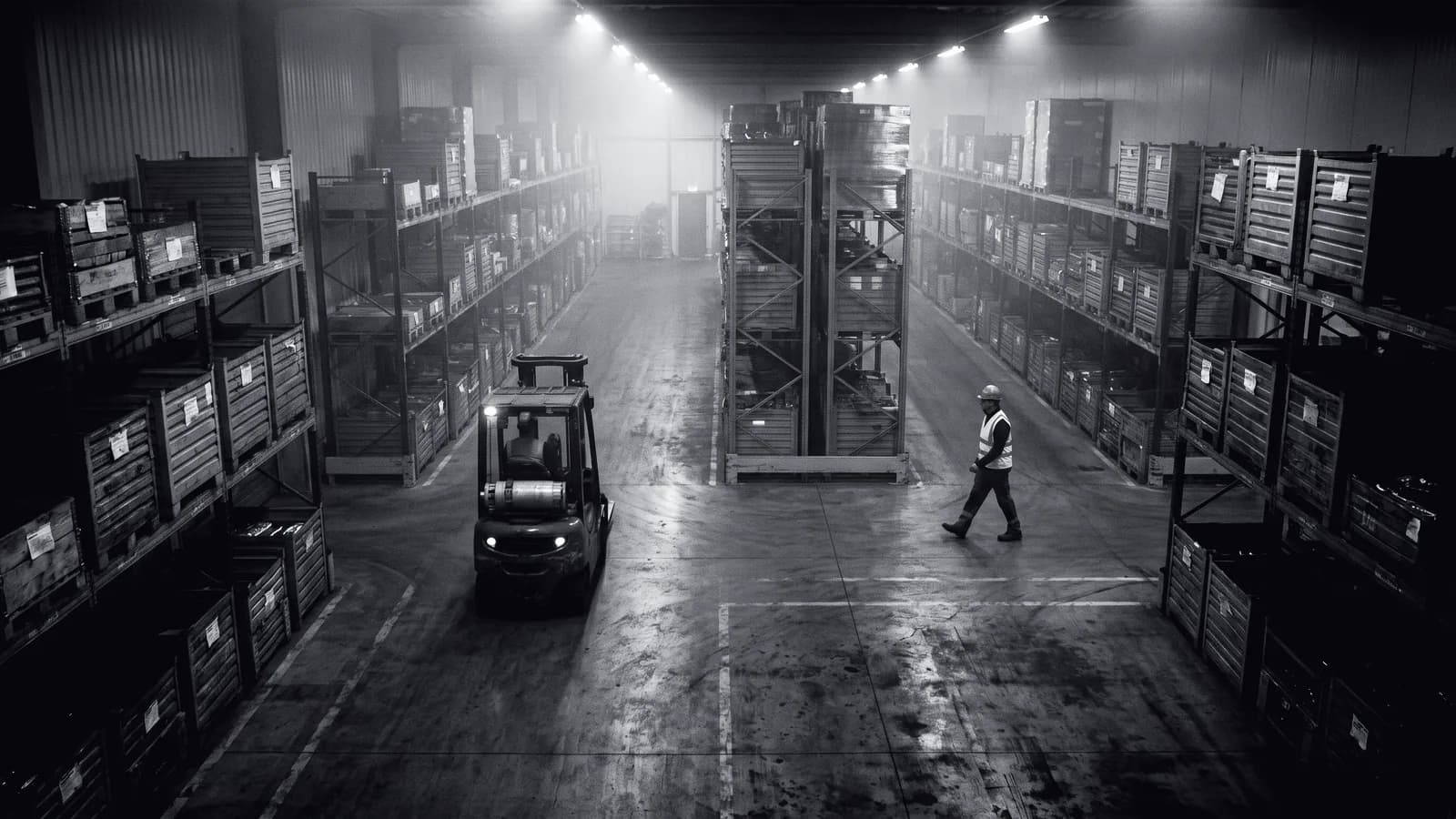
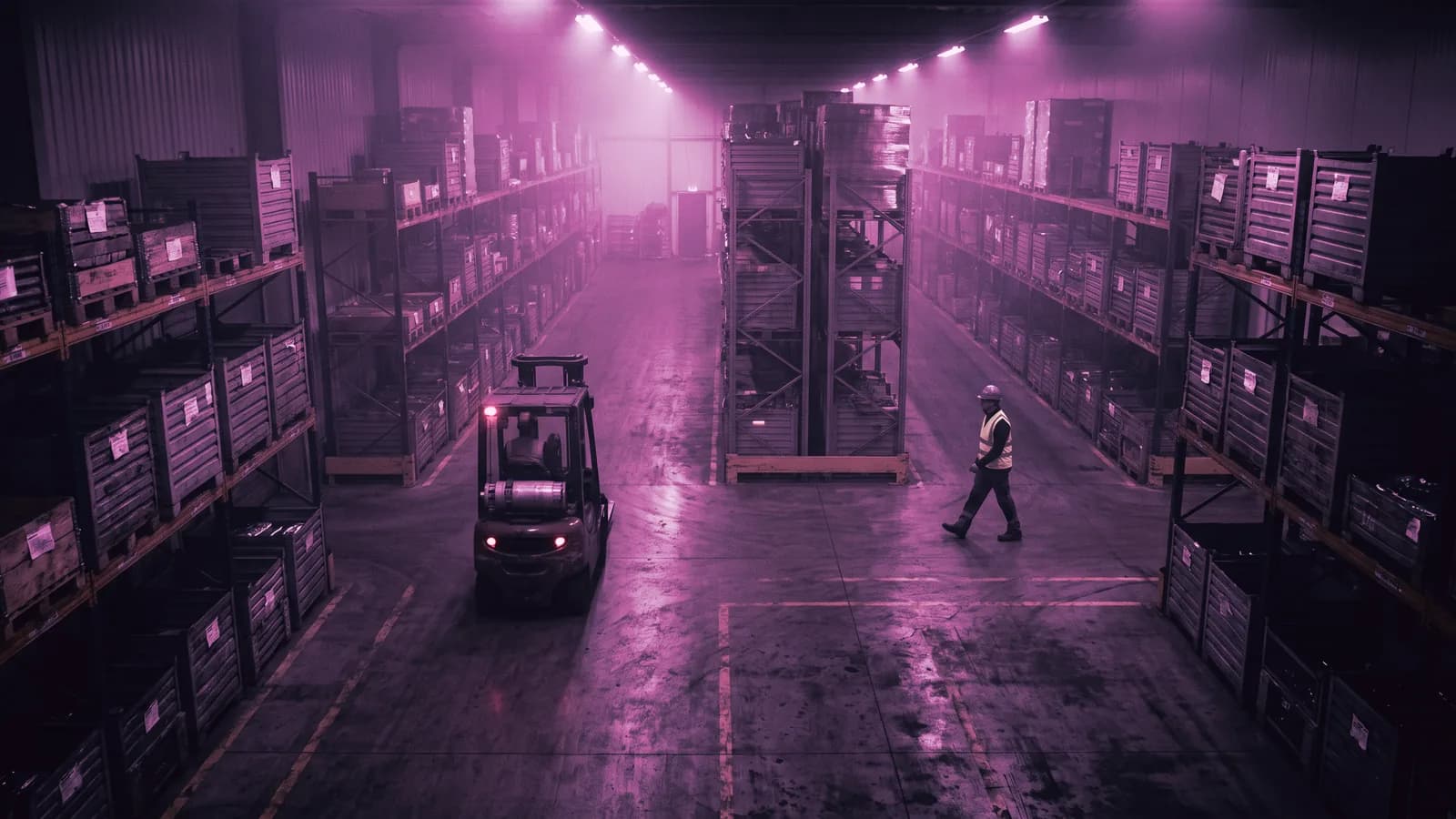
Illustrative analysis of this frame: Forklift, Trajectory, Person.
Detected regionsRegion, normalised frame coordinates
- 01ForkliftObjectX 0.33 Y 0.42 A 1.9% ∠ +81°
- 02TrajectoryInteractionX 0.39 Y 0.71
- 03PersonObjectX 0.65 Y 0.47 A 0.4% ∠ +77°
What the system is asked to recognise here
- 01
Vehicles and handling equipment across yards, lanes, gates and quays.
- 02
People on ground shared with moving heavy equipment.
- 03
Assets and units relative to the zones they are supposed to occupy.
- 04
Operating sequences, arrival, positioning, handling, departure, read as sequences.
- 05
Deviation from an area's own flow pattern rather than from a generic rule.
Where this applies in a logistics operation
- 01
Yards and terminals whose area exceeds any practical direct supervision.
- 02
Shared ground between pedestrians and handling equipment during continuous operation.
- 03
Gates, lanes and quays, where sequence rather than presence is the thing being read.
- 04
Round-the-clock sites where an area's own baseline is the only meaningful reference.
Operational value
The value is that the physical state of a very large area becomes continuously legible alongside the consignment state that systems already track, on infrastructure the site already owns. Arkania does not publish throughput, dwell or incident figures it cannot evidence per deployment; what a given terminal achieves is established during the engagement.
Common questions
Can it cover an area as large as a port terminal?
Coverage is a function of the camera and sensor estate rather than of the analytics, which is why the work starts from what is installed and where it points. Edge inference is what makes a large, thinly connected site practical to read continuously.
Does it replace our yard management or TOS?
No. Those systems track consignments; this reads physical state, where equipment is, which ground is shared, whether a sequence ran as expected, and integrates with what is already in place through SCADA, OPC UA, MQTT and M2M.
Movement is constant here. Won't it alert on everything?
That is precisely why detection is structured around interactions and scenarios rather than movement. The question asked is whether what is happening is normal for this area at this time, not whether something moved.
Does imagery leave the site?
Not unless the deployment is designed that way. On-premise and edge inference are both supported, and the client retains control over data flows and ownership of trained models.
Are the models third-party?
No. Arkania designs, develops, trains and operates its own models, with ownership at code, architecture and lifecycle level.
Related topics
Discuss a project with Arkania
Tell us about the environment, the scale and the operational conditions. Requests are reviewed by the team, not by a queue.
Industrial and enterprise enquiries · EN / ES