

01 · Operating environment
AI for oil and gas operations
Industrial AI for monitoring, safety, infrastructure awareness and operational visibility across refineries, pipelines and production fields.
Refineries, pipelines and production fields run continuously, in conditions that punish equipment and leave little margin for a system that only works in a demonstration. Arkania deploys computer vision and video analytics into those environments, on the cameras, sensors, drones and robots already installed, to give operations teams visibility over what is happening while it happens.
The operating context
An upstream field, a pipeline right-of-way and a refinery are three different problems wearing one industry name. What they share is that the asset is distributed, the workforce moves through it, and the window between a condition appearing and a condition mattering is short. Control rooms are already instrumented for pressure, flow and temperature; what they are not instrumented for is what a camera can see, a person in the wrong place, a fluid where there should be none, a vehicle inside a live lift radius. That gap is where visual AI belongs, and it is the reason the work is an addition to the control environment rather than a replacement for it.
- Person
- Machinery
- Infrastructure
- Anomalous behaviour
- Zone
What makes these environments difficult
- 01
Assets are distributed across distances that no control room can watch continuously, and the consequences of a missed event are measured in safety rather than in downtime alone.
- 02
Connectivity is unreliable at the edge of a field, so an architecture that depends on a round trip to a hyperscaler is an architecture that stops working where it is needed most.
- 03
Existing installations cannot be replaced. Any system has to work with the cameras, SCADA and control infrastructure already in place.
- 04
Regulatory and sovereignty requirements often rule out sending operational imagery to a third-party model.
Scenario
A release that has no edge
A spill has no fixed shape and no boundary a camera can assume in advance. It is read as a region rather than as an object: the extent is segmented, the area is derived from the traced boundary, and the operator standing off it is a separate detection with its own distance to the edge.
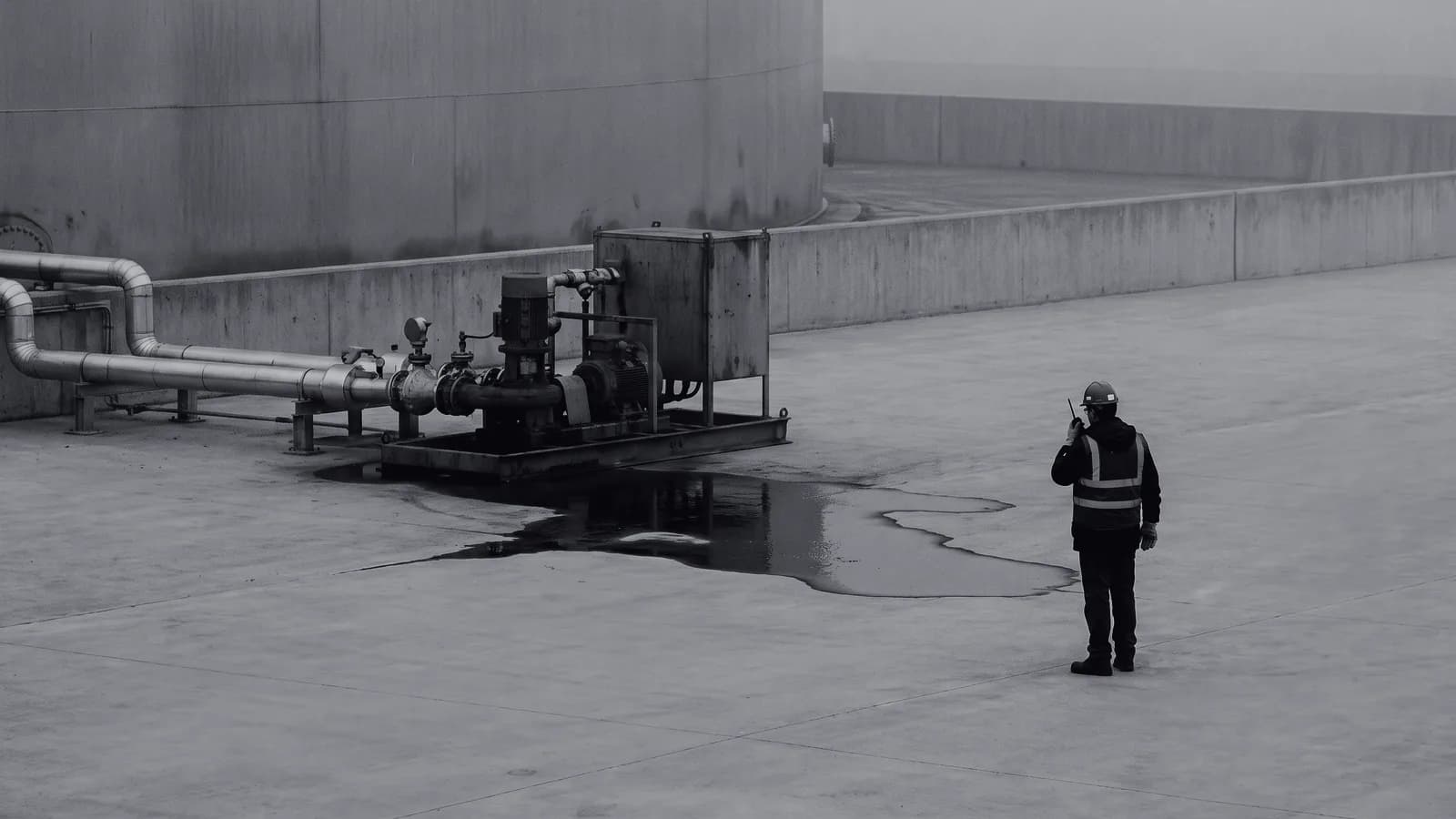
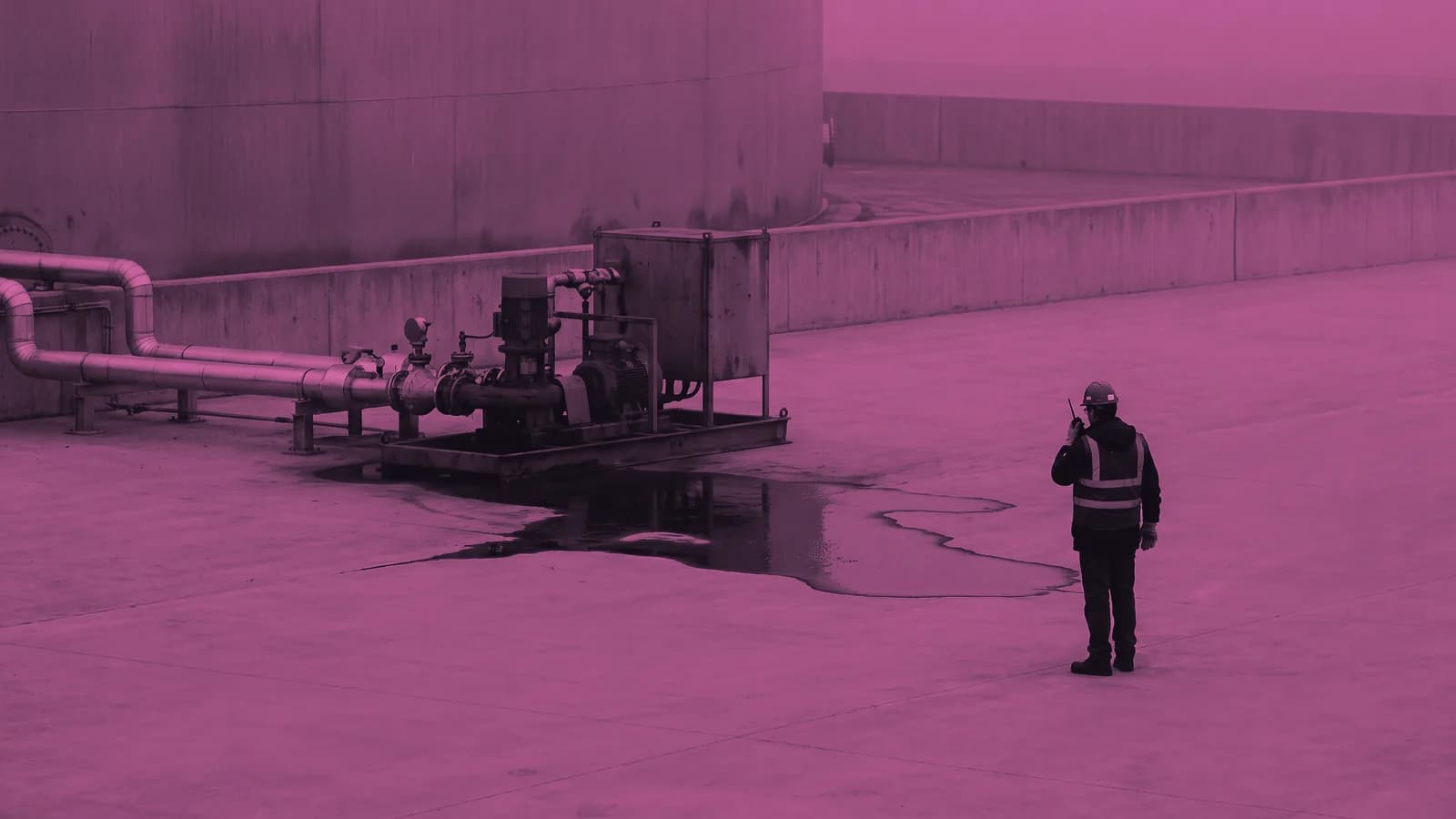
Illustrative analysis of this frame: Spill, Person, Machinery.
Detected regionsRegion, normalised frame coordinates
- 01SpillScenarioX 0.17 Y 0.61 A 3.5% ∠ +2°
- 02PersonObjectX 0.72 Y 0.48 A 1.9% ∠ −88°
- 03MachineryObjectX 0.18 Y 0.39 A 6.2% ∠ +2°
What Arkania brings
- 01
Detection and recognition running on-premise, at the edge on cameras and drones, or in private cloud, the deployment follows the constraint, not the other way round.
- 02
Integration with systems already in operation through SCADA, OPC UA, MQTT and M2M, so the analytics enrich the control environment instead of replacing it.
- 03
Fully proprietary models, owned at code and lifecycle level, with no dependency on external providers for continuity.
- 04
Contextual understanding rather than isolated detections: objects, the interactions between them, and the scenarios those interactions form.
The AI capabilities that apply here
- 01Industrial computer vision
- Reading assets, people, machinery and zones from the cameras, drones, robots and embedded devices already deployed across the site.
- 02Contextual video analytics
- Not just what is in frame, but what it is doing and what that combination means in this specific environment.
- 03Anomaly identification
- Deviation against the expected operating condition of a zone, rather than against a generic rule written elsewhere.
- 04Operational alerting
- Findings routed to the people who act on them, with the auditability an incident review will later demand.
Scenario
Sound everywhere except here
A run of pipe in good condition with one patch where the coating has failed. The failure has a traceable boundary, which is what makes it a segmentation rather than a bracket, and the asset is outlined around it so the extent of one reads against the extent of the other.
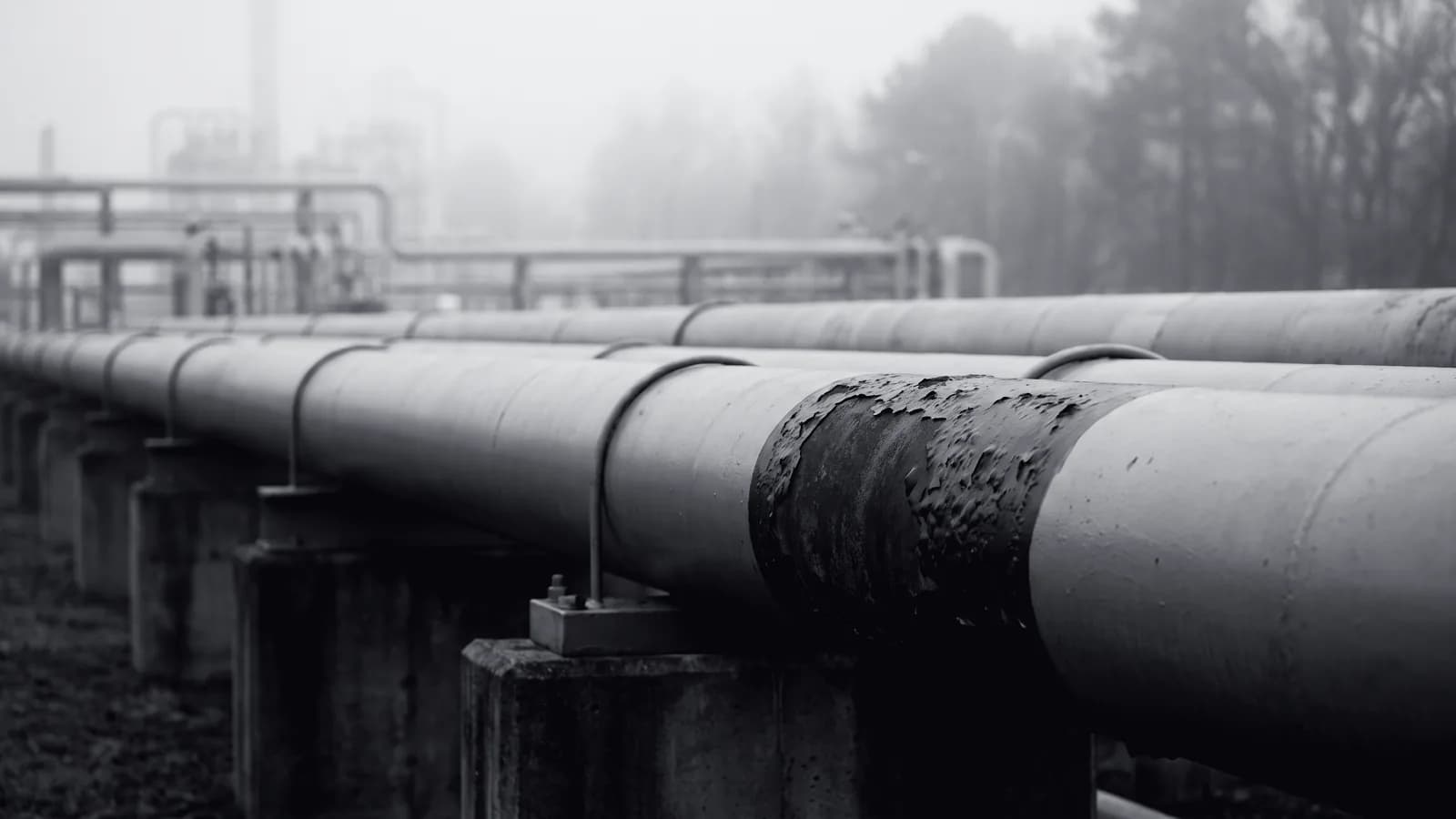
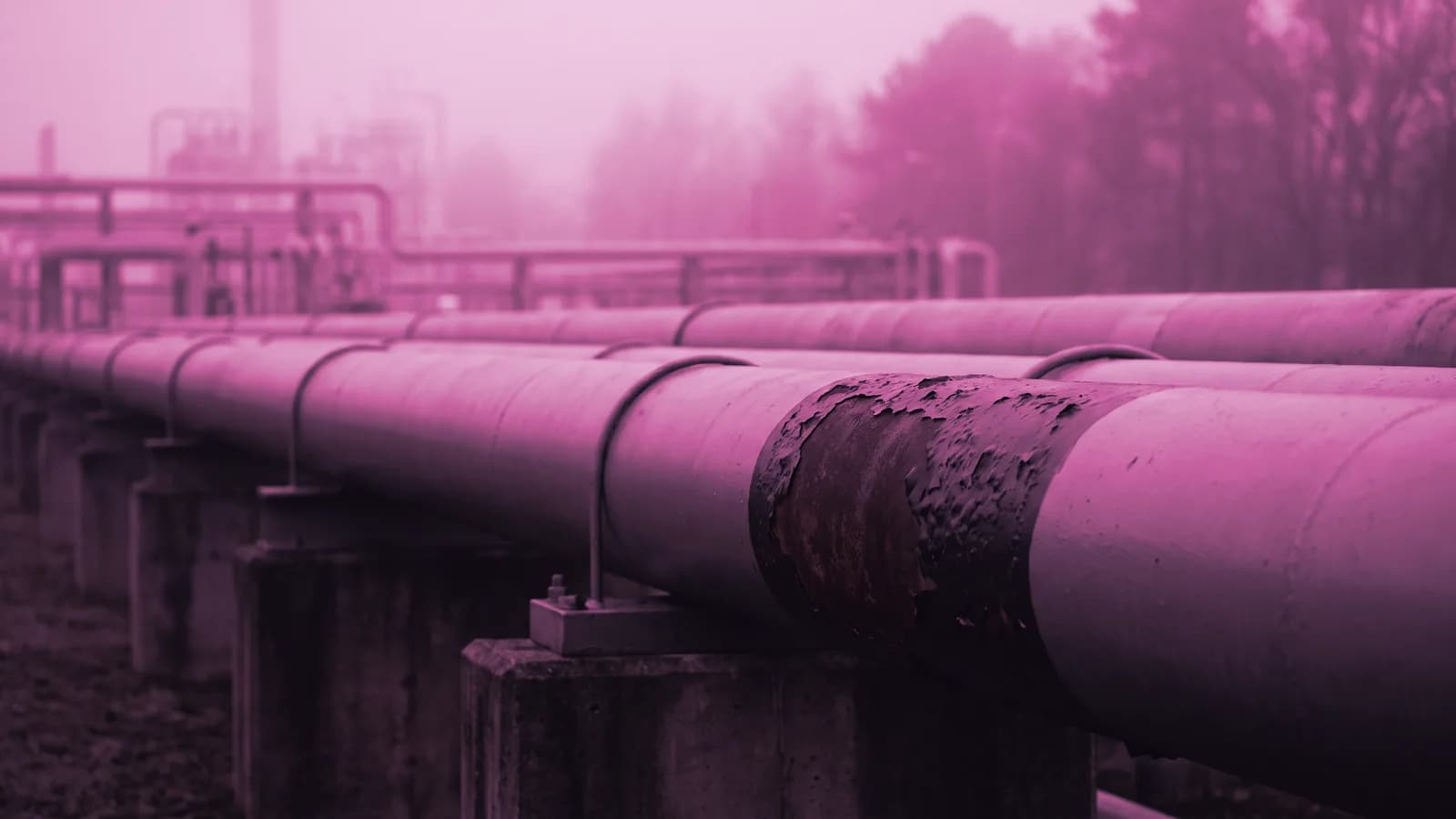
Illustrative analysis of this frame: Corrosion, Pipework.
Detected regionsRegion, normalised frame coordinates
- 01CorrosionScenarioX 0.53 Y 0.43 A 5.9% ∠ −4°
- 02PipeworkObjectX 0.00 Y 0.43 A 21.5% ∠ −1°
Detection examples in this environment
- 01
People inside restricted or live-work zones, and personal protective equipment resolved as a chain rather than as a single guess.
- 02
Vehicles and heavy plant relative to exclusion radii, access gates and pipeline corridors.
- 03
Fluid and spray events, including the measurement of how far they have propagated.
- 04
Fixed infrastructure, vessels, valve skids, flare stacks, pipe racks, held against its own normal state.
- 05
Behavioural and sequence anomalies: a task performed out of order, a posture that should not hold, a corridor busier than its own baseline.
Applications built for this sector
- 01
Spray detection, measurement and control, a case that several other vendors attempted before Arkania delivered it.
- 02
Fluid detection with propagation measurement.
- 03
Drone-based construction progress control against a checklist, applied on pipeline works.
- 04
Personal protective equipment verification, resolved as a chain of detections: person, then head, then helmet.
- 05
Posture and ergonomics during tool handling, and operator and equipment control around rotating equipment.
Operational value
The value is visibility that arrives while a situation is still developing, on infrastructure that is already installed, without handing operational imagery or trained models to a third party. Arkania does not publish performance figures it cannot evidence per deployment; what each installation delivers is established during the engagement.
Common questions
Can Arkania run without sending data to the cloud?
Yes. Deployment is supported on-premise, at the edge on cameras, drones, robots and embedded devices, and on private or hybrid cloud. Clients retain control over data flows and ownership of trained models.
Does it work with cameras and control systems already installed?
Yes. Integration with existing systems is a design requirement rather than an add-on, through SCADA, OPC UA, MQTT and M2M, so infrastructure already in operation is used rather than replaced.
Is the technology built on third-party AI models?
No. Arkania designs, develops, trains and operates its own systems, owned at code, architecture and lifecycle level, with no dependency on hyperscaler models or black-box inference engines.
Which detection types are supported in this sector?
Detection is structured across objects, people, vehicles, machinery, infrastructure, the interactions between them, and the scenarios those interactions form, including anomalous behaviour and risk patterns.
What does a first engagement look like?
It starts from the environment rather than from the software: which cameras exist, where they point, what an operator is expected to do with a finding, and which constraint, connectivity, regulation, sovereignty, decides where inference runs. What the installation delivers is established during that work, not promised before it.
Discuss a project with Arkania
Tell us about the environment, the scale and the operational conditions. Requests are reviewed by the team, not by a queue.
Industrial and enterprise enquiries · EN / ES