

04 · Applications
Built for operations already running
Four application areas built for environments already in production: the operational problem, and the capability brought to it.
Selected applications
Four application areas Arkania builds for, across environments already in production. What is described here is the operational problem and the capability brought to it.
No client names, no figures and no outcomes appear on this page. Those require a client-approved case, and where one exists it will be published as one, with the client named and the numbers evidenced, or not at all.
01 · Traffic control · urban planning
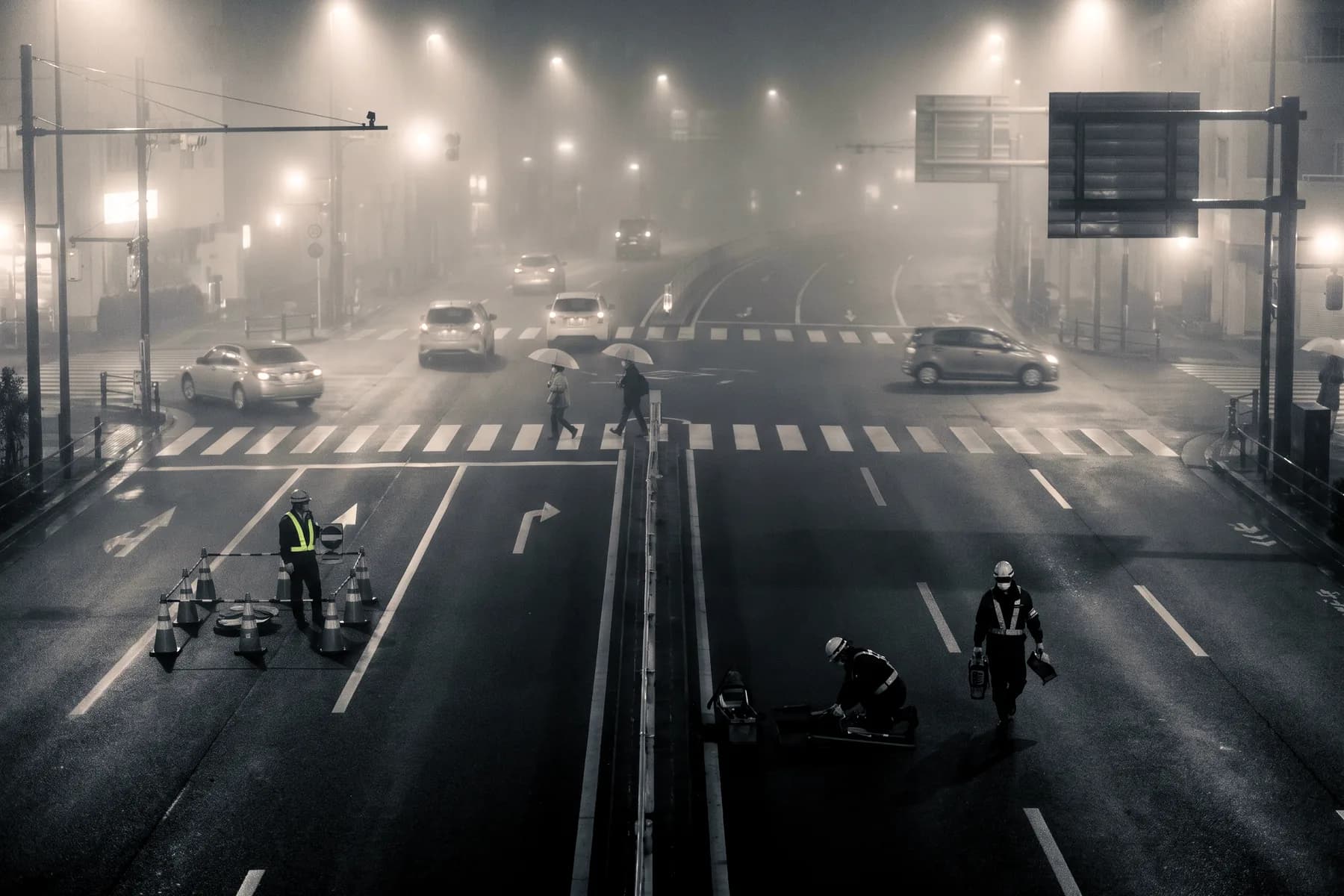
Smart Traffic
- Operating environment
- Large-Scale Logistics
- Built with
- REFLEX
Context
Urban traffic is monitored almost everywhere and read almost nowhere. Cameras at junctions, on corridors and at access points produce a continuous picture that is used for enforcement after the fact and for very little while it is happening.
Challenge
The difficulty is that traffic is movement by definition, so movement cannot be the signal. What matters is composition and sequence, how flow is distributed across a junction, which movements conflict, how a corridor's behaviour departs from its own pattern for that hour of that day.
Capabilities applied
- 01
Vehicle and pedestrian recognition across junctions, corridors and access points.
- 02
Flow and sequence analysis, read as a pattern rather than as a count.
- 03
Zone integrity where vehicles and pedestrians share ground.
- 04
Deviation from a corridor's own established baseline for the time of day.
Relevant detections
- Vehicle
- Person
- Zone
- Operational sequence
The operational relevance is that a control room sees composition rather than volume, and that urban planning gains a continuous record of how infrastructure is actually used rather than a periodic survey of it.
Context
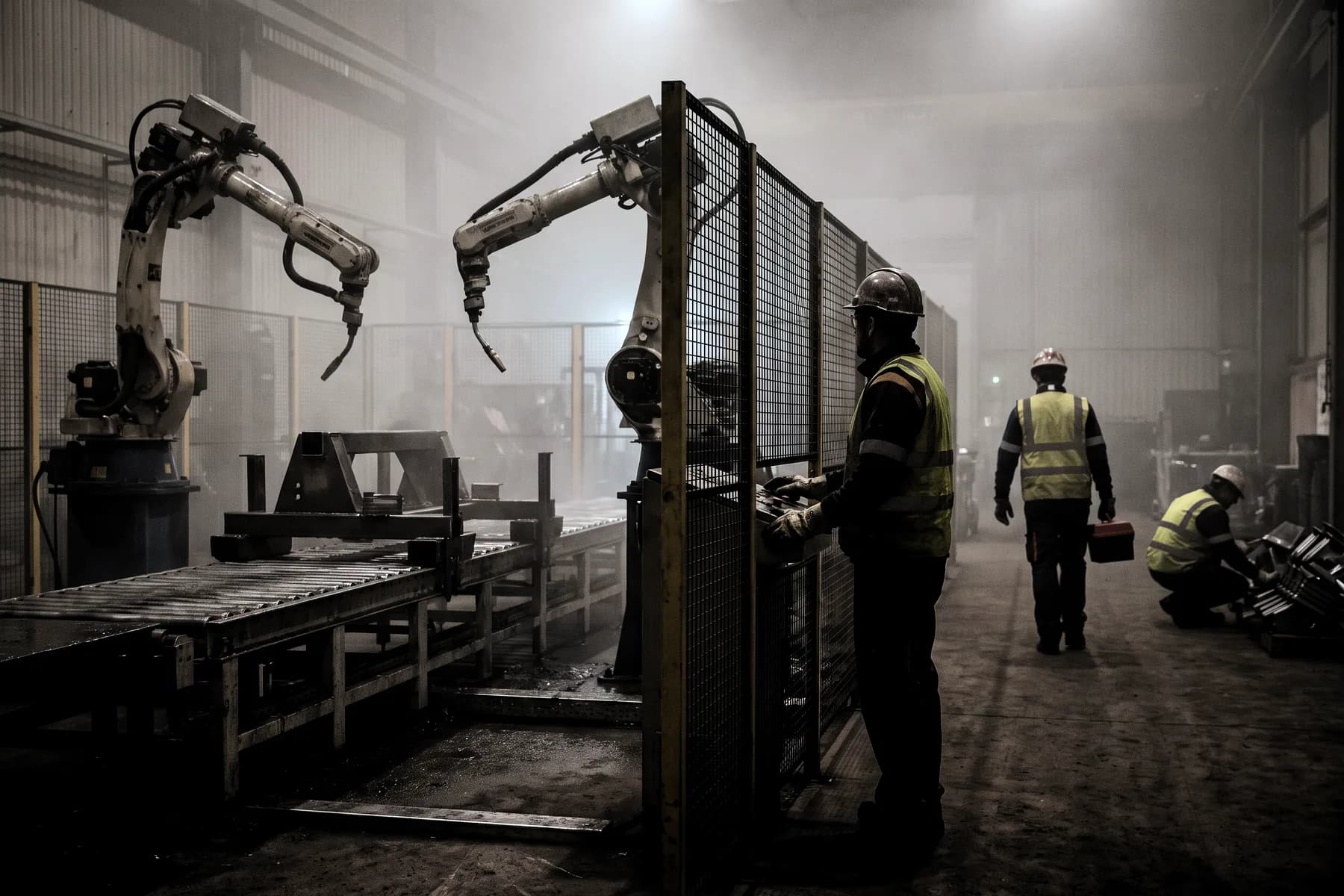
Automated cells know their own state precisely and know nothing about the space around them. The robot knows its joint positions; it does not know that someone reached into the cell, that a fixture is out of position, or that the cycle it just completed was performed in the wrong order upstream.
Challenge
The hard part is that correct and incorrect differ by very little, a hand position, an order, a moment, and that cycle times are short enough that a finding arriving after the cycle is a record rather than an intervention.
Capabilities applied
- 01
Machinery and operator recognition around automated cells.
- 02
Interaction analysis: approach to and handling of equipment in motion.
- 03
Operating sequence recognition, read across stations rather than at one.
- 04
Anomaly identification against the cell's own established pattern.
Relevant detections
- Machinery
- Person
- Interaction
- Anomalous behaviour
The operational relevance is that the space around the automation becomes observable on the same timescale the automation itself works on, using cameras rather than additional machine instrumentation.
Context
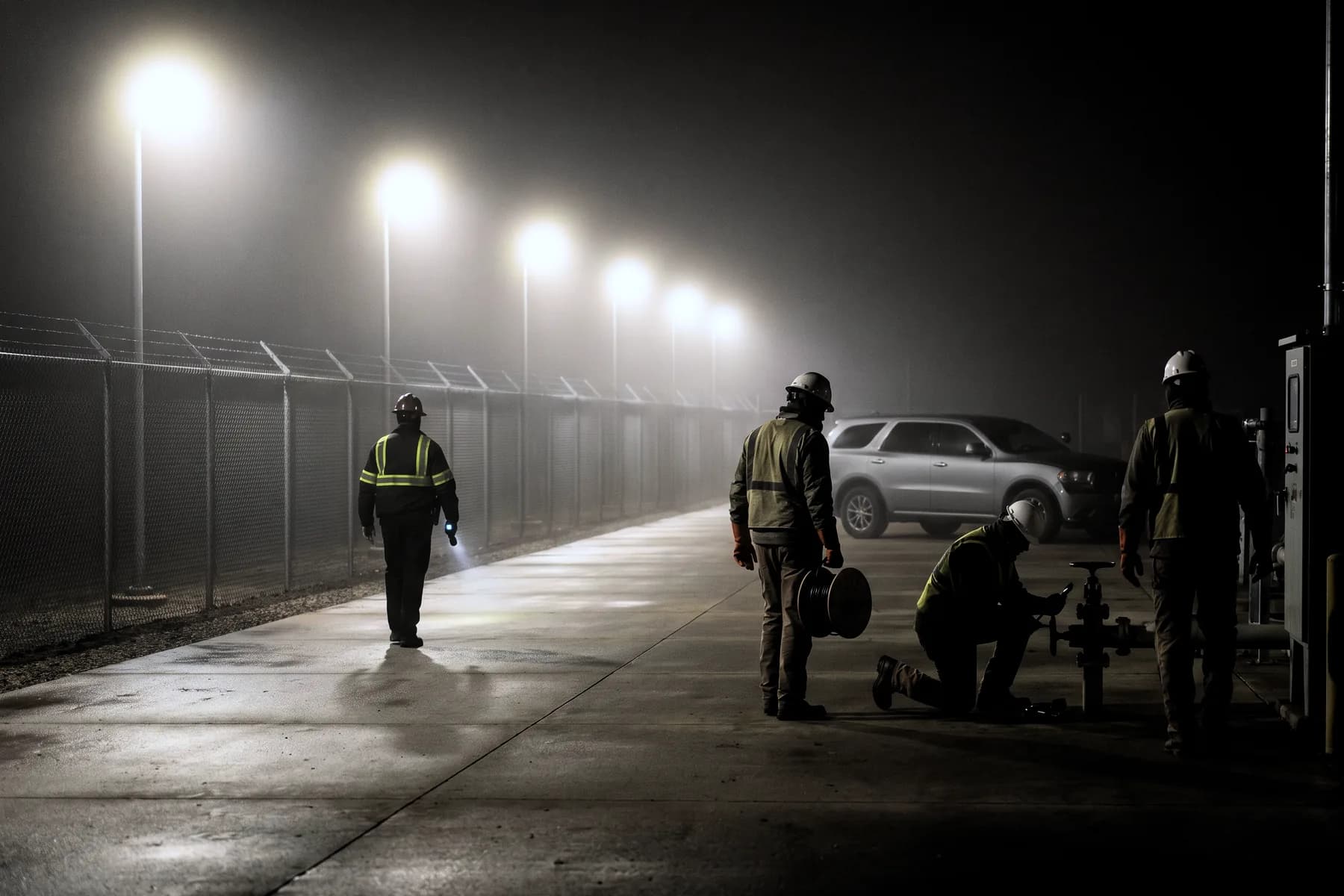
Physical security stopped scaling long before AI arrived. An operator can hold a handful of feeds in genuine attention and most sites have hundreds, so the practical mode of use became forensic: something happens, and the recording explains it afterwards.
Challenge
Motion-triggered alerting is the instinctive fix and it fails on exactly the sites that need it most, because on a working site almost everything moves. The question is not whether something moved but whether what is happening is normal for this place at this time.
Capabilities applied
- 01
Continuous reading of an existing camera estate rather than review of what it recorded.
- 02
Perimeter and access analytics across boundaries longer than any operator can watch.
- 03
Behavioural analysis against an area's own baseline for that hour.
- 04
Incident intelligence, with the record a later review will require.
Relevant detections
- Person
- Perimeter
- Anomalous behaviour
- Risk pattern
The operational relevance is attention that does not degrade across a shift, applied to an estate that already exists, producing findings a team acts on rather than volume they learn to mute.
Context
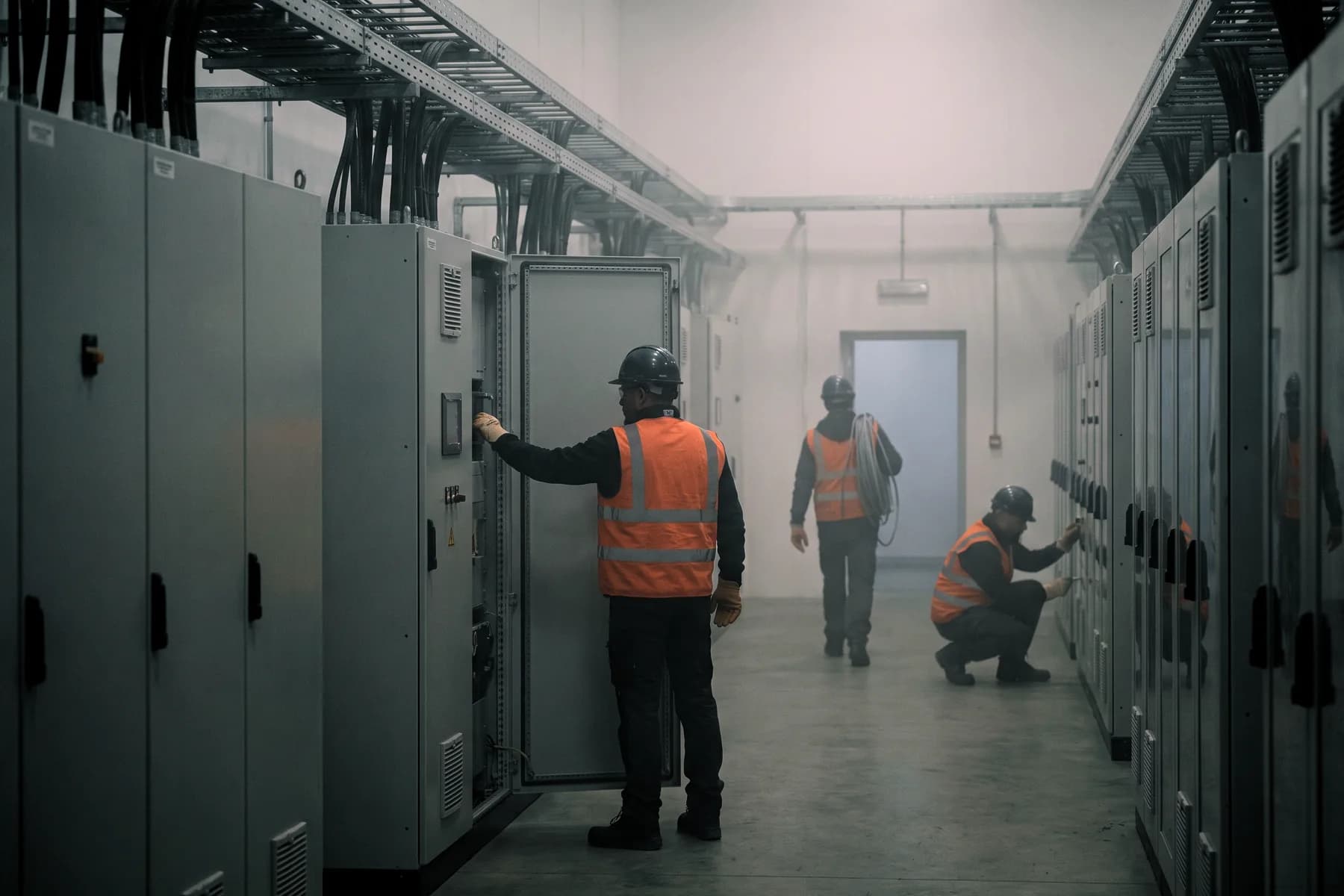
A detection system that runs continuously across a large estate produces a great deal of data, and most of it is uneventful. The value is not in storing it but in what can be established from it across a period long enough that no individual observed the whole of it.
Challenge
The difficulty is separating the pattern from the volume. A single frame is rarely significant; a recurring condition across weeks usually is, and it is invisible to anyone reviewing footage one incident at a time.
Capabilities applied
- 01
Pattern identification across long operating periods.
- 02
Sequence analysis, where meaning is carried by order rather than by any single event.
- 03
Anomaly identification against a baseline established from the estate's own history.
- 04
Processing placed where the constraint requires, on-premise, at the edge, or in private cloud.
Relevant detections
- Risk pattern
- Operational sequence
- Anomalous behaviour
The operational relevance is that the accumulated record becomes usable as evidence about how the environment actually behaves, rather than as an archive consulted only when something has already gone wrong.
Related environments
Related topics
Discuss a project with Arkania
Tell us about the environment, the scale and the operational conditions. Requests are reviewed by the team, not by a queue.
Industrial and enterprise enquiries · EN / ES